We provide the best Quality of products to you.We are always here to help our lovely customers.
©2026 Ashth. All Rights Reserved | Managed & Developed by Weingenious Technocrats.

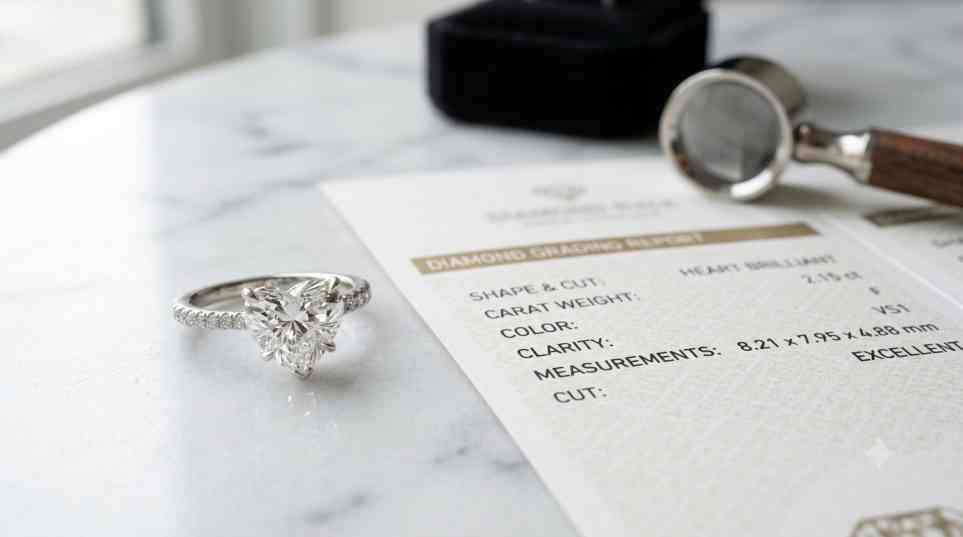
A heart-shaped diamond can look beautiful in a photo but uneven when you see it in person. Its two rounded sides may look different, or the point may not be clear. This is why checking the diamond grading report is an important step before buying a Heart Shaped Diamond Ring.
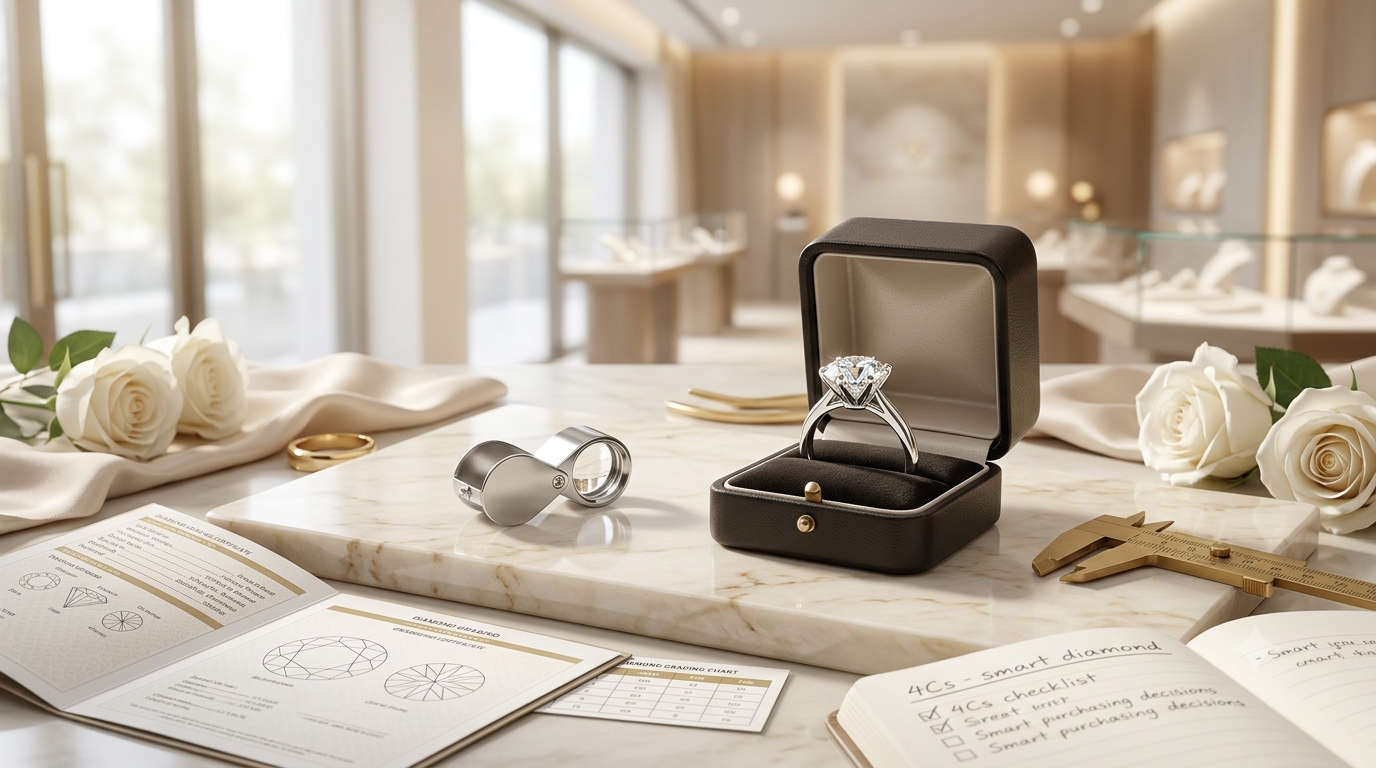
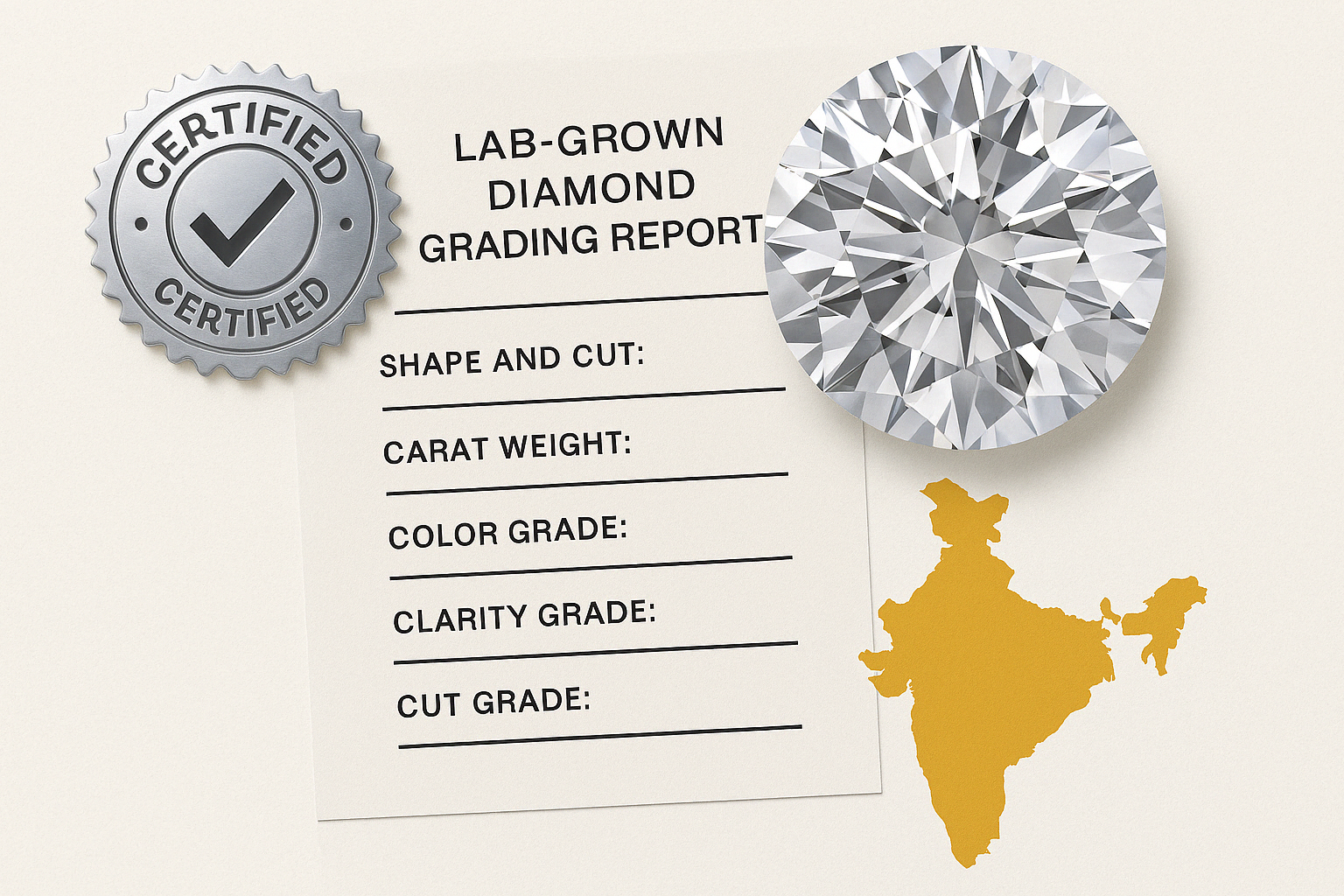
A diamond certificate, often called a diamond grading report, gives useful information about the stone. It helps you understand its quality, weight, color, and clarity. However, it cannot tell you everything about its beauty or sparkle.
In this guide, we will explain what a heart-shaped diamond ring certificate should include, how to check it, and what to look for before making your purchase.
Before checking the diamond grades, start by making sure the report is genuine and belongs to the diamond you want to buy.
Look for the name of the grading lab, such as GIA or IGI. These are well-known diamond grading organizations.
Your report should include:
Grading lab name: Shows which organization examined the diamond.
Report number: A unique number used to identify the report.
Issue date: Tells you when the report was prepared.
Different labs may use different grading methods and report formats. So, it is helpful to understand which lab issued your report before comparing diamonds.
Check whether the report lists the diamond as a heart shape. Also, compare its measurements and grades with the details provided by the seller.
If the diamond has a laser-inscribed report number on its girdle, ask a jeweler to help you check it. You can also use the grading lab's official online report lookup.
Remember, not every diamond has a laser inscription. The absence of one does not automatically mean the report is false.
A grading report records the lab's findings about a diamond. It is not an appraisal, a promise of future value, or a guarantee that you will love the stone.
An independent gemologist can help check whether the report matches the actual diamond.
You can ask: Does the report match this stone, and are there any visible features that I should know about?
This simple step can help you make a more informed buying decision.
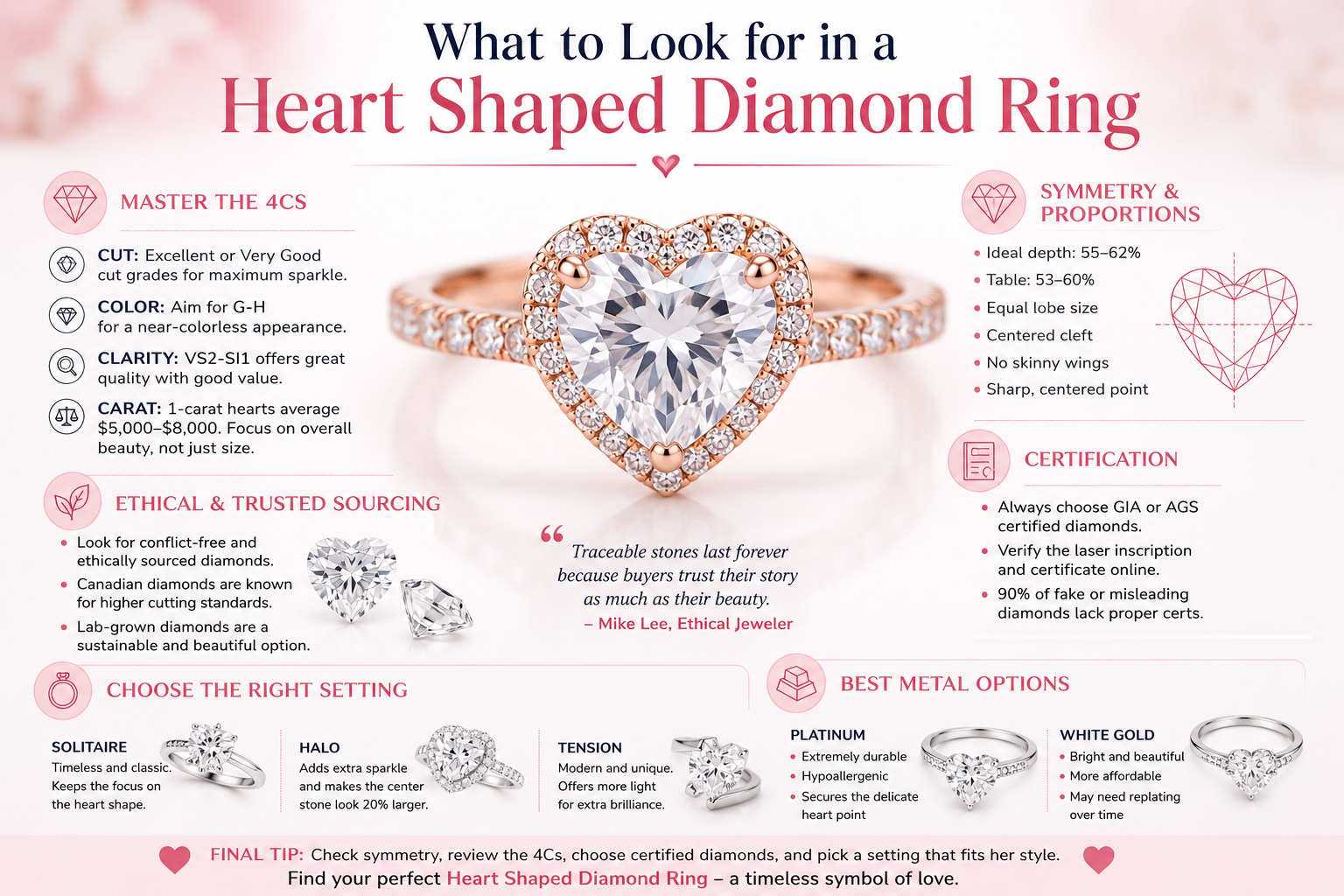
The 4Cs are important when choosing a Heart Shaped Diamond Ring. They help buyers compare diamonds using common quality details.
Here is what each C means:
Carat: Measures the weight of the diamond.
Color: Shows how colorless or warm the diamond appears under the grading system used.
Clarity: Describes internal features and surface marks.
Cut: Describes aspects of how the diamond is cut. The exact information provided depends on the grading lab and diamond shape.
These details are useful, but they do not explain every part of a diamond's appearance. Two diamonds with similar grades can still look different.
Check the diamond's length, width, and depth measurements. The report should also identify its shape as heart-shaped.
Carat weight does not tell you exactly how large a diamond will look from the top. A heavier diamond may not always have a larger face-up appearance.
For this reason, compare both carat weight and measurements when choosing a ring.
If included, check the report's details about:
Polish: The quality of the diamond's surface finish.
Symmetry: How well the diamond's parts are aligned and shaped.
Fluorescence: How the diamond reacts to ultraviolet light.
These details can help you compare stones. However, do not judge a diamond only by one feature.
It is also important to know that GIA does not assign an overall cut grade to fancy shapes such as heart-shaped diamonds. Its cut grading guidance distinguishes round brilliant diamonds from fancy shapes. This means you should inspect the actual diamond rather than depend on a cut grade alone.
A heart shape needs careful attention because its outline plays a big role in its beauty.
A well-defined heart shape usually has two rounded upper lobes, a clear cleft in the middle, and a pointed bottom.
When looking at a diamond, check:
Do both sides look balanced?
Are the two upper curves smooth?
Is the center cleft easy to see?
Does the bottom point look clear and neat?
A grading report may identify the diamond's shape, but it does not necessarily tell you whether the outline looks attractive.
Look at both sides of the heart diamond. One side should not look noticeably larger or differently shaped than the other unless that is a look you personally prefer.
The length and width measurements can offer a useful starting point. Still, there is no single length-to-width ratio that is perfect for everyone.
Your choice may also depend on the ring setting and your personal style.
For example, someone who likes a wider heart may choose a different shape from someone who prefers a longer, narrower outline.
Some diamonds may show dark areas or uneven light patterns when viewed face-up. These details may not be clear from the grading report.
Ask the seller for a clear video of the diamond in different lighting conditions. Look at the stone in normal indoor light and other suitable lighting.
You can also ask an independent gemologist to check its light return, any bow-tie-like dark areas, and other dark patches. Not every heart diamond will show the same pattern, so judge the actual stone.
A good grading report helps you understand the diamond, but the final choice should also depend on what you can see.
If the report includes a clarity plot, check the location of the inclusions and other marked features.
Ask these questions:
Are any inclusions visible without magnification?
Do they affect the beauty of the diamond?
Could any feature raise a durability concern?
Not every inclusion is a problem. Its size, position, and type matter. If you have concerns, ask a qualified gemologist to explain them.
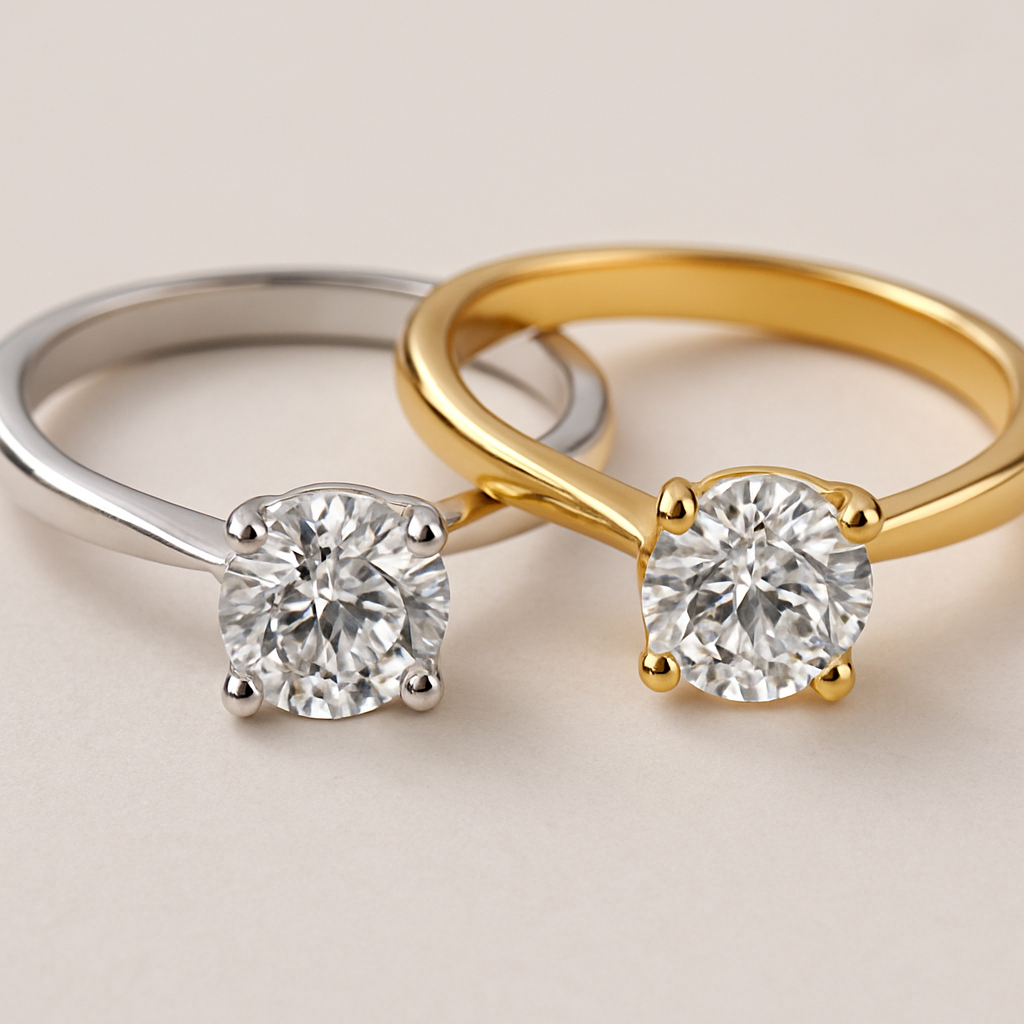
The color grade is useful, but the ring's metal can also affect how the diamond looks.
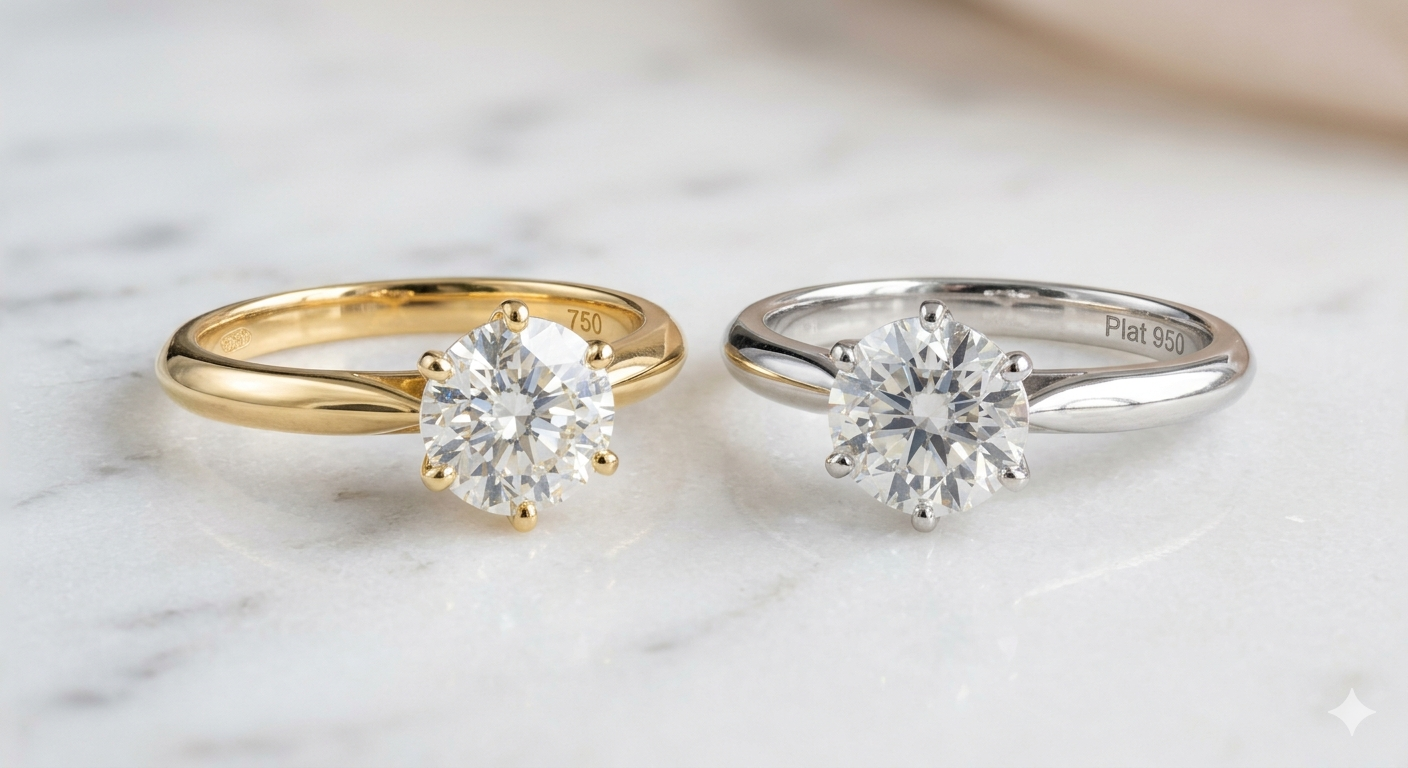
Yellow or rose gold may make a warmer-looking diamond feel more natural with the overall design. White metal can make color differences easier to notice.
Whenever possible, view the diamond in the setting you plan to buy. This helps you understand how the complete ring will look.
Imagine two heart diamonds with the same carat weight and color grade. One has a more balanced outline and fewer visible inclusions, while the other has uneven curves and marks that are easier to see.
Even if their reports show similar grades, you may prefer the first diamond after viewing both stones.
This is why it is helpful to compare diamonds with similar grades, measurements, and setting plans.
If you are exploring different styles, you can also compare lab grown diamond rings india to understand the available choices. You may also explore an oval diamond ring if you prefer a softer, elongated shape, or a solitaire ladies ring for a simple design.
The right choice is the one that suits your taste, budget, and daily needs.
A few simple checks can help you avoid confusion when buying your diamond ring.
Visit the official website of the grading lab and use its report verification tool, if available.
Check whether these details match:
Report number
Diamond shape
Measurements
Carat weight
Color and clarity grades
If something does not match, ask the seller or grading lab for clarification before paying.
A reliable seller should be able to explain the diamond's details clearly.
Request clear photos, videos, written information about the center stone, and the return policy.
Also, ask whether the grading report covers the loose diamond or the finished ring. A report for a loose diamond may not describe the full ring, and the setting can block parts of the stone.
Before buying an Engagement Ring, make sure you understand what is included in the price and what documents you will receive.
Keep your diamond grading report, sales receipt, appraisal, and insurance documents together.
A grading report describes the diamond. An appraisal estimates its value for a stated purpose and under stated conditions. An appraisal may be needed for insurance, but it is not the same as a grading report.
Having these records can make future servicing, insurance, or resale discussions easier.
Choosing a Heart Shaped Diamond Ring is about more than reading grades. Start with a trustworthy grading lab, verify the report number, and check the 4Cs, measurements, polish, and symmetry details.
Then look at the diamond in person or request a clear video. Pay attention to its outline, pointed tip, rounded lobes, and sparkle.
The simple buying rule is this: Use the grading report to confirm what the diamond is, and use your eyes to decide whether you love its shape and beauty.
When you combine both steps, you can choose your ring with greater confidence.
Frequently Asked Questions (FAQs)
A heart shaped diamond ring certificate should include the grading lab name, report number, issue date, diamond shape, carat weight, color, clarity, and measurements. It may also include polish, symmetry, fluorescence, and a clarity plot.
No, a diamond grading report and an appraisal are different. A grading report describes the diamond's features and quality. An appraisal estimates its value for a specific purpose and under stated conditions.
You can verify the report using the grading lab's official website, if an online lookup is available. Match the report number, diamond shape, measurements, and grades with the actual stone.
Not always. GIA does not assign an overall cut grade to fancy shapes such as heart-shaped diamonds. Buyers should check the diamond's symmetry, proportions, outline, and light performance.
Look at the diamond from the top. Check whether both rounded lobes look balanced, the cleft is clear, and the bottom point is neat. You can also ask a gemologist to inspect its shape.

Shop By Category
Shop By Category
Shop By Category
Shop By Category
Shop By Category
Collections













 Round
 Pear
 Heart
 PRINCESS
 Oval
 CUSHION
 EMERALD
 MARQUISE
 Asscher
 RADIANT
 Ashth CUT
 ROSE CUT
 BRIOLETTE
 SINGLE CUT
 TRAPEZIUM
 TULIP
 TRIANGLE
 BUTTERFLY
 FLOWER
 MOVAL
 CLOVER
 BAGUETTE
 9KT ASHTH CUT
 9KT MARQUISE
 9KT PEAR
 9KT RADIANT
 9KT EMERALD