Ashth - Where Exceptional Craftsmanship Defines Modern Luxury !

- Rings
- Earrings
Shop By Category
- Bangles/ Bracelets
Shop By Category
- Necklaces
Shop By Category
- Pendants
Shop By Category
- ASHTH LITE
Shop By Category
- Collections
Collections
Shop By Category
Shop By Category
Shop By Category
Shop By Category
Shop By Category
Collections
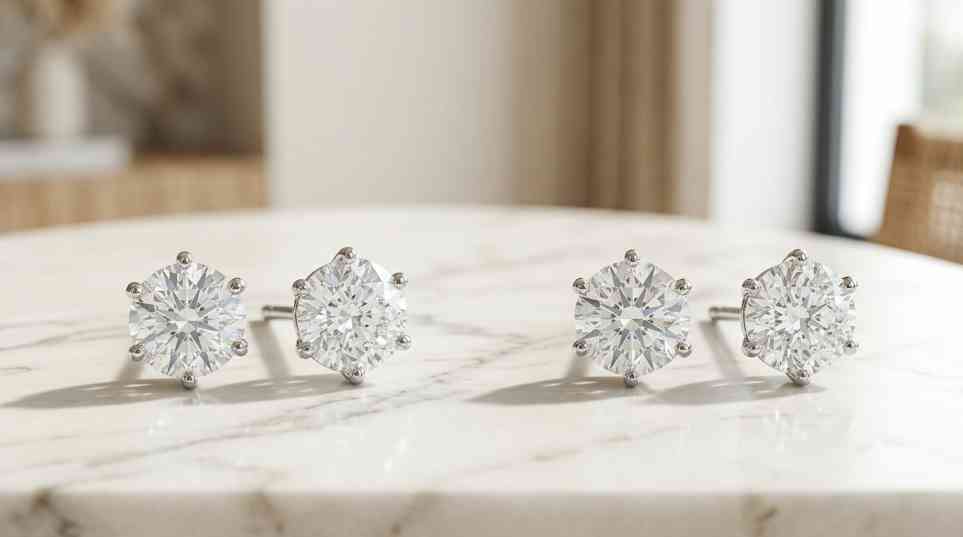
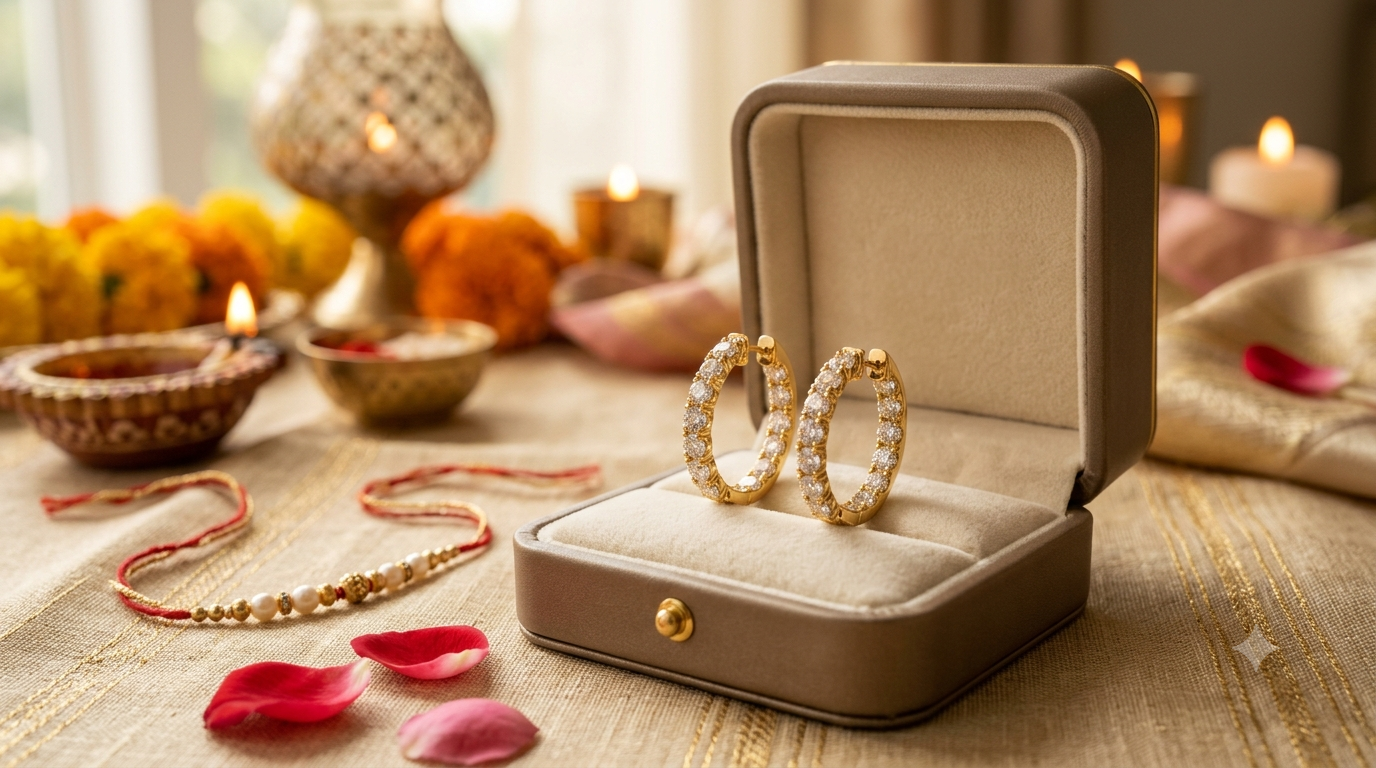
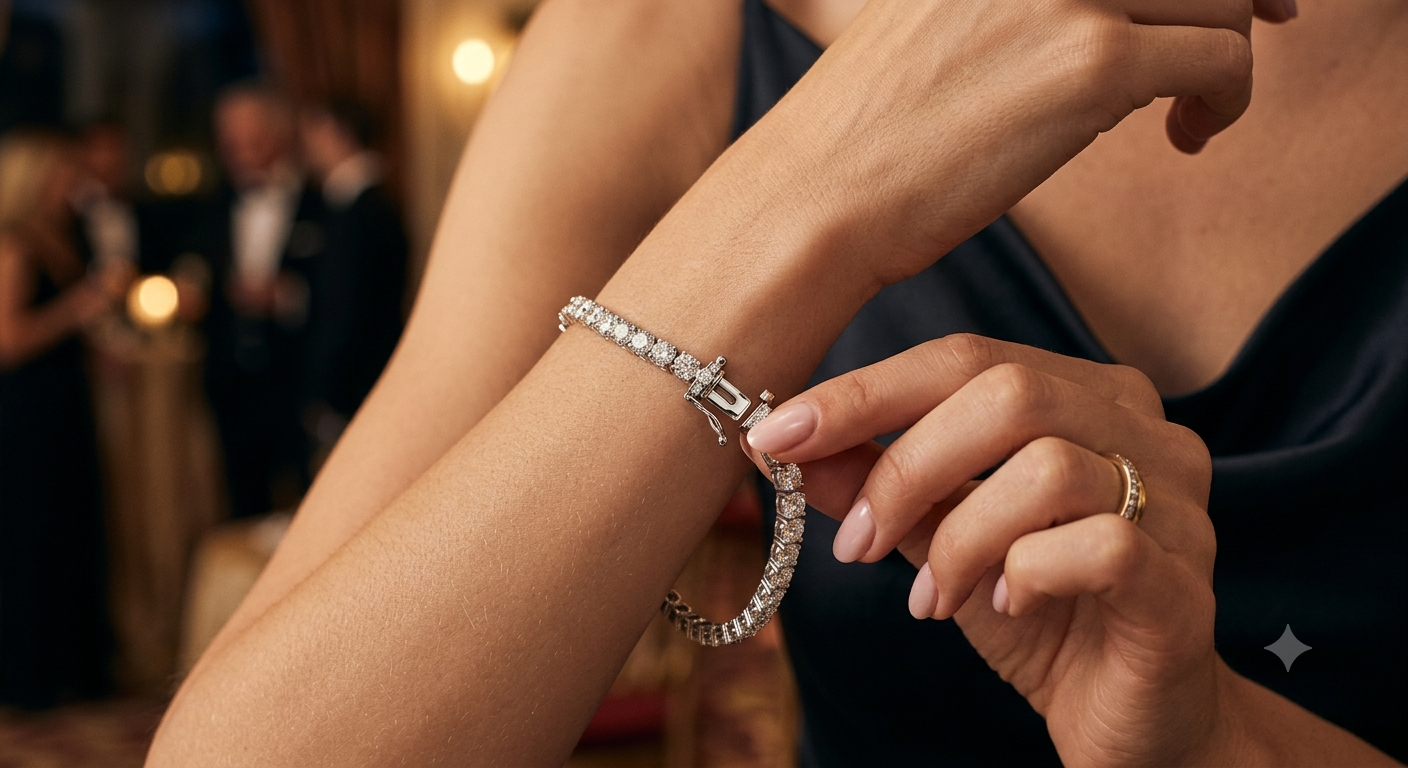
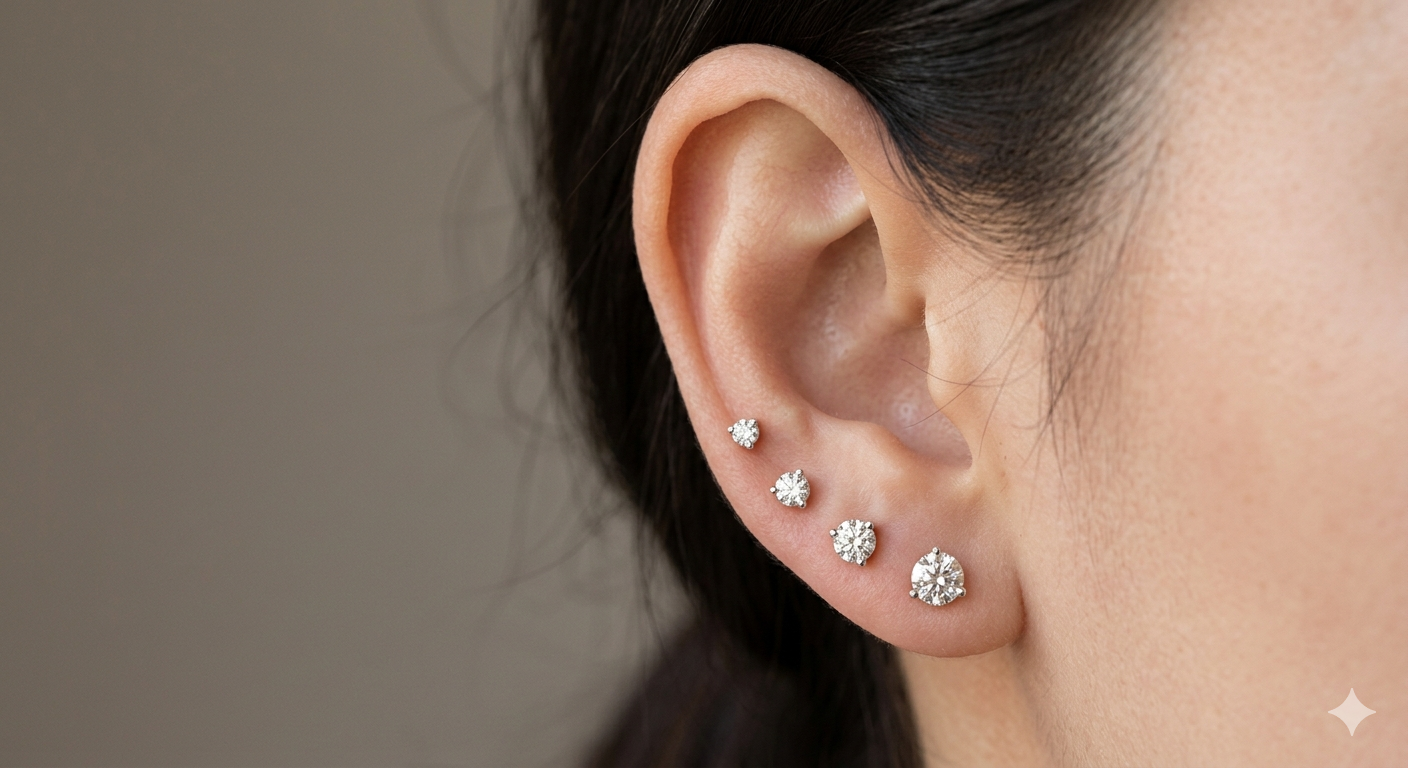
A pair of diamond earrings can add beauty to almost any outfit. But when you start shopping, you may face one big question: Should you buy lab-grown or natural diamond earrings?
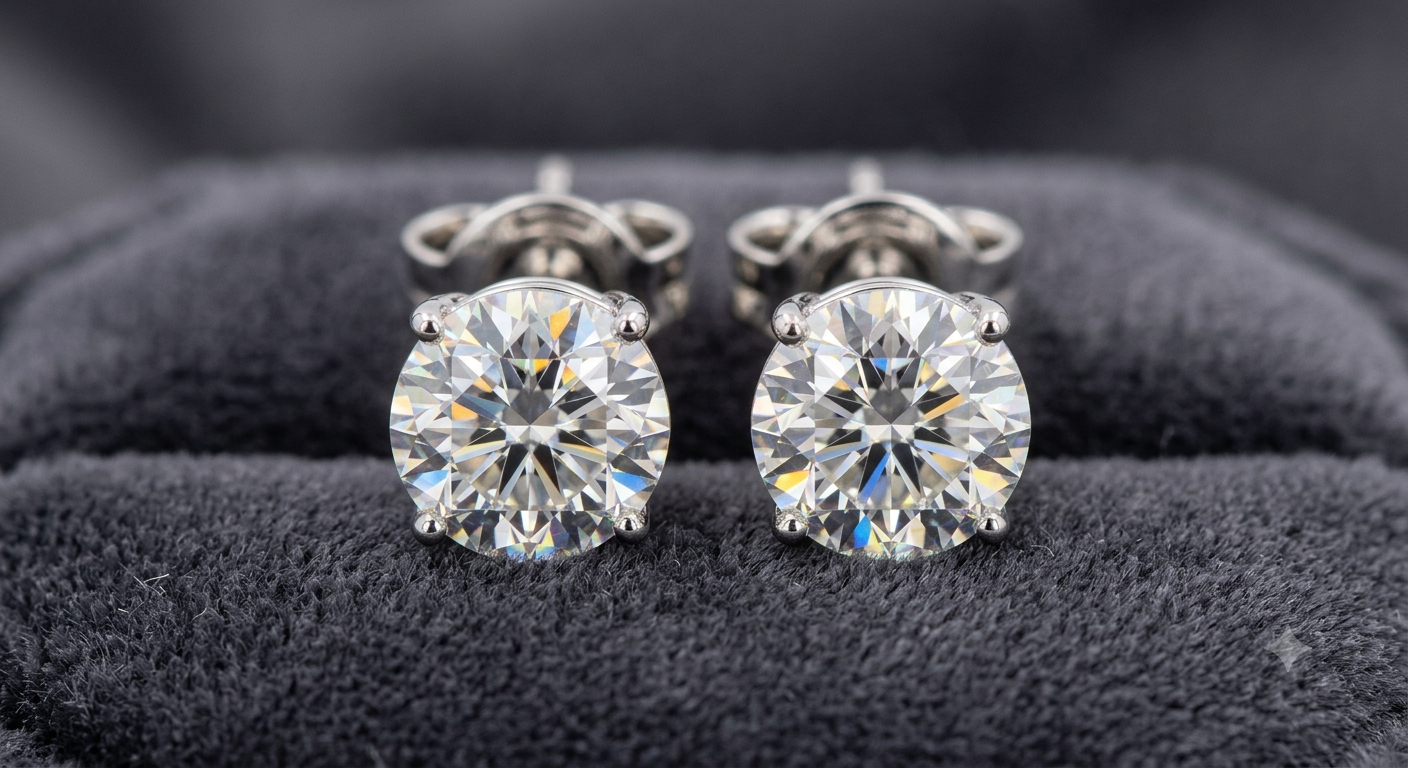
If you want to buy lab grown diamond earrings, you may enjoy lower prices and more size options. Natural diamond earrings, on the other hand, offer a mined origin and a story that began deep inside the Earth.
Both types are real diamonds. They can look almost the same, but they differ in how they are made, how much they cost, and how some buyers value them.
So, which one should you choose? Let's compare their sparkle, quality, price, origin, and everyday use to help you make the right choice.
Before buying diamond earrings, think about what matters most to you.
Lower price: Do you want beautiful diamond earrings without spending too much?
Mined origin: Do you prefer diamonds that formed naturally inside the Earth?
Bigger look: Would you like larger stones within your budget?
Long-term ownership: Do you care about keeping the earrings for many years?
Your answers can make the decision easier.
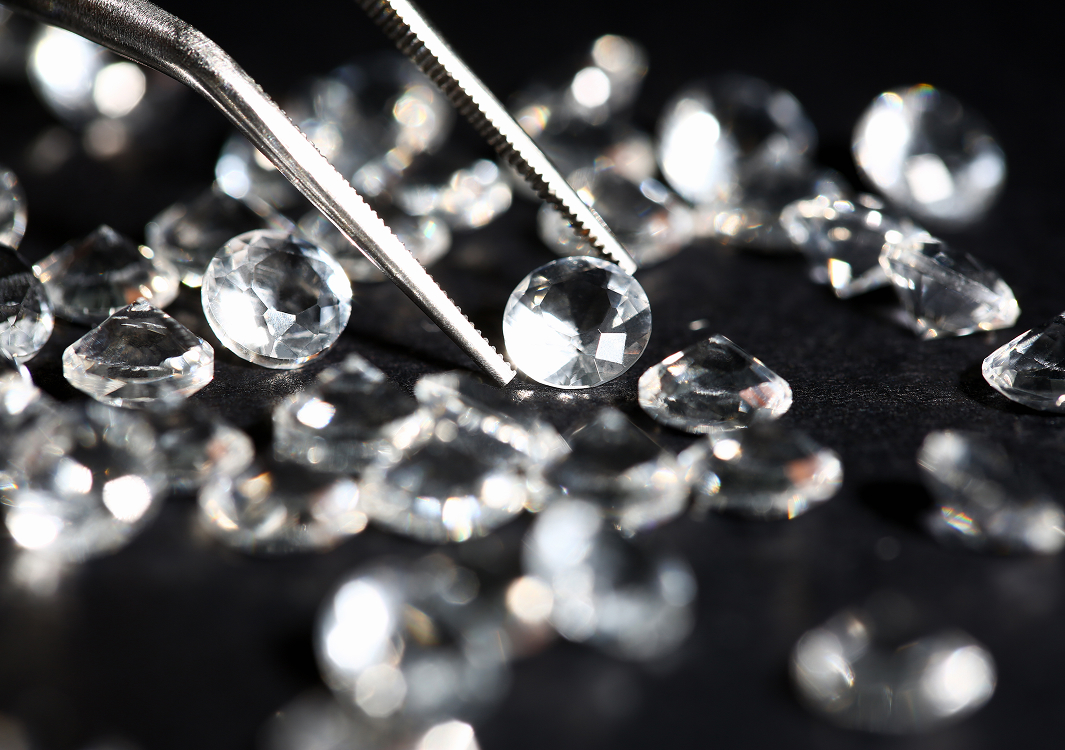
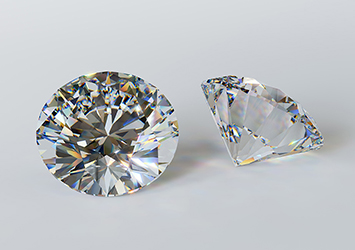
Lab grown diamonds are real diamonds made in controlled settings. Natural diamonds form underground over very long periods.
Both are different from diamond lookalikes, such as cubic zirconia. These materials may look similar, but they do not have the same properties as diamonds.
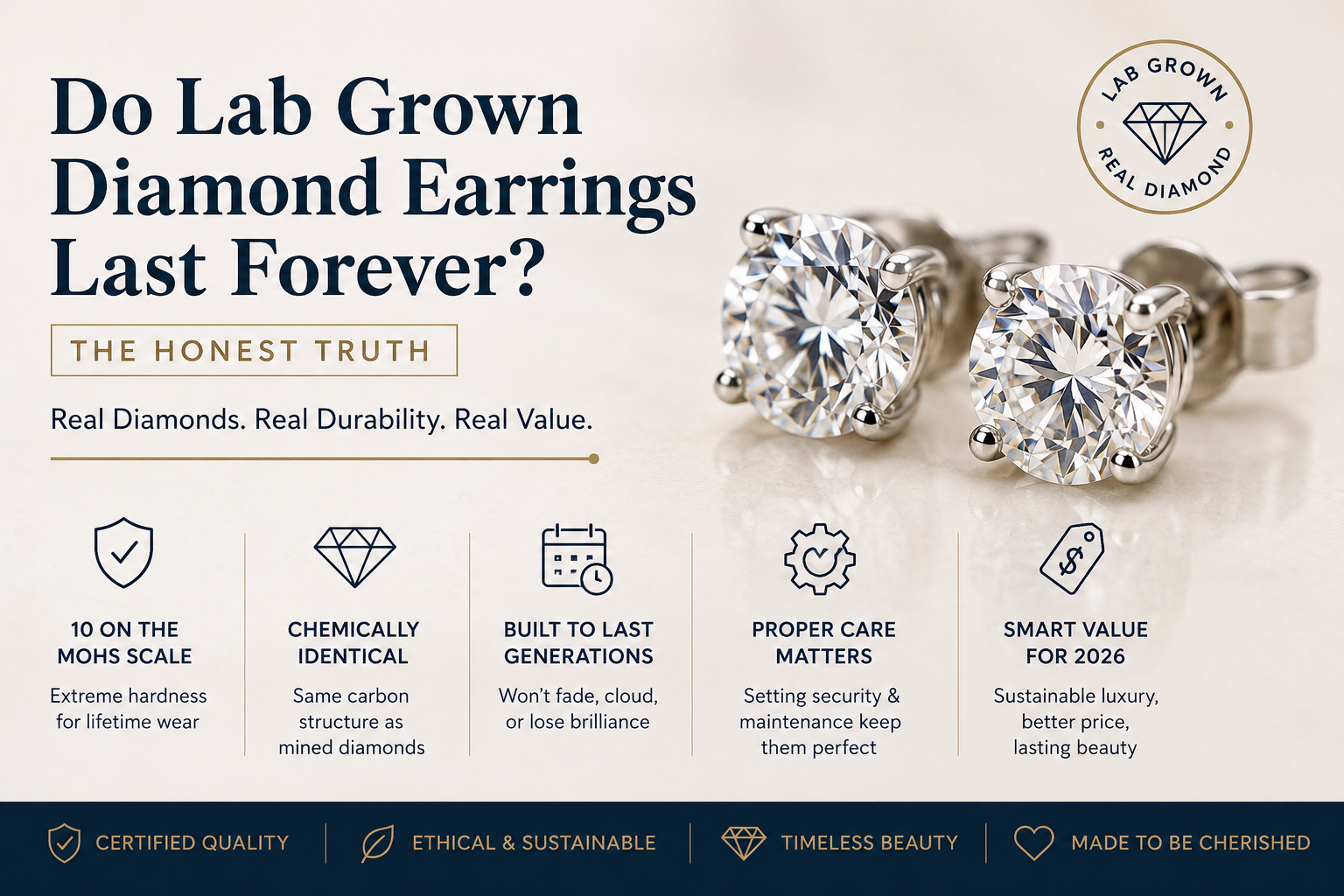
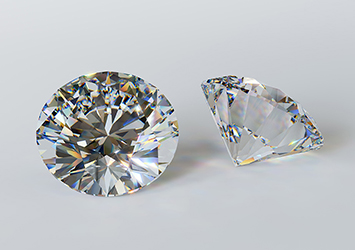
Lab grown and natural diamonds have essentially the same chemical composition, crystal structure, and main optical and physical properties.
The Gemological Institute of America (GIA) explains that lab grown diamonds have essentially the same properties as natural diamonds.
This means both types can offer beautiful sparkle, shine, and durability.
Both also score 10 on the Mohs hardness scale, making diamond the hardest natural mineral on this scale. However, hardness does not mean a diamond cannot break. A sharp hit can still cause a chip, especially near an edge or pointed corner.
You also cannot reliably identify a diamond's origin just by looking at it. A trained gemologist and proper testing equipment can help identify whether a diamond is natural or lab-grown.
GIA's educational guidance explains that lab-grown diamonds are real diamonds with essentially the same chemical and physical properties as natural diamonds.
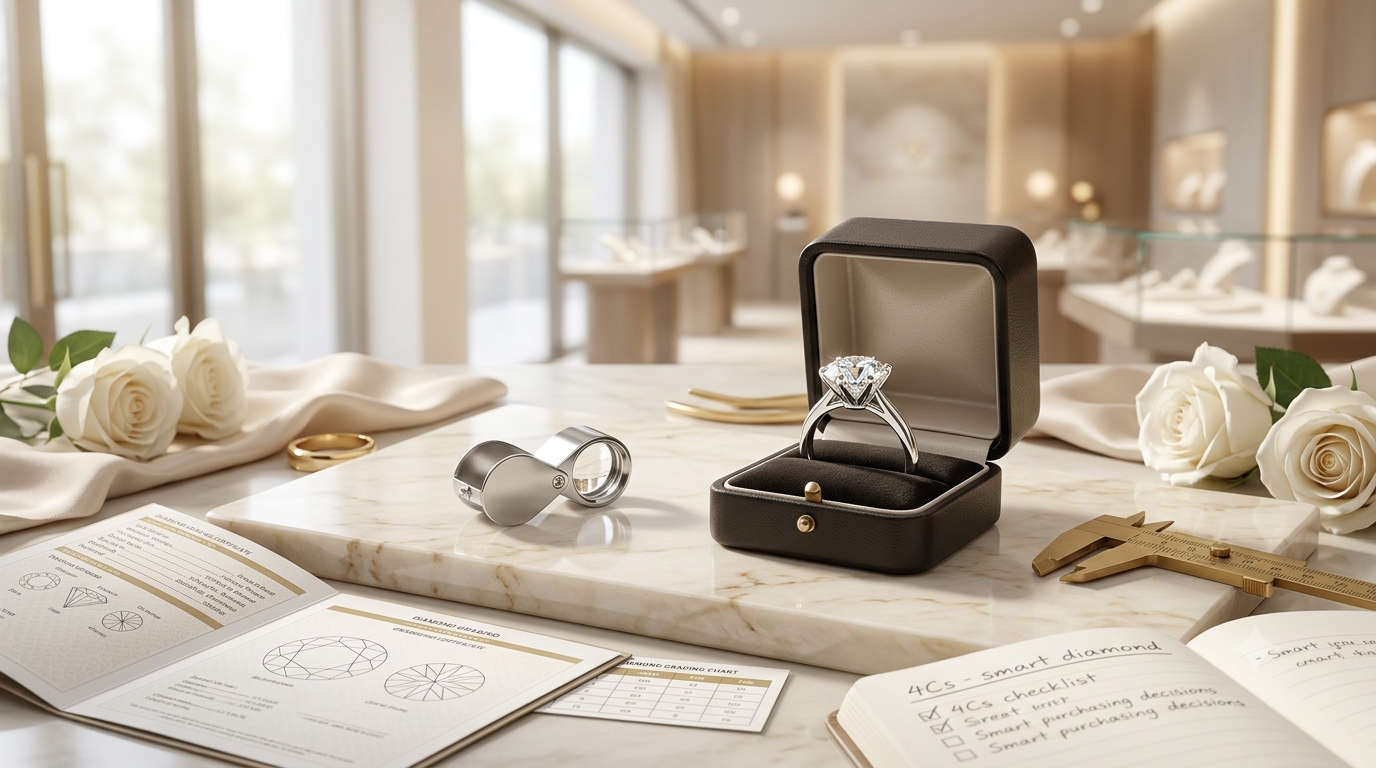
When comparing diamond earrings, do not focus only on their origin. The 4Cs also matter.
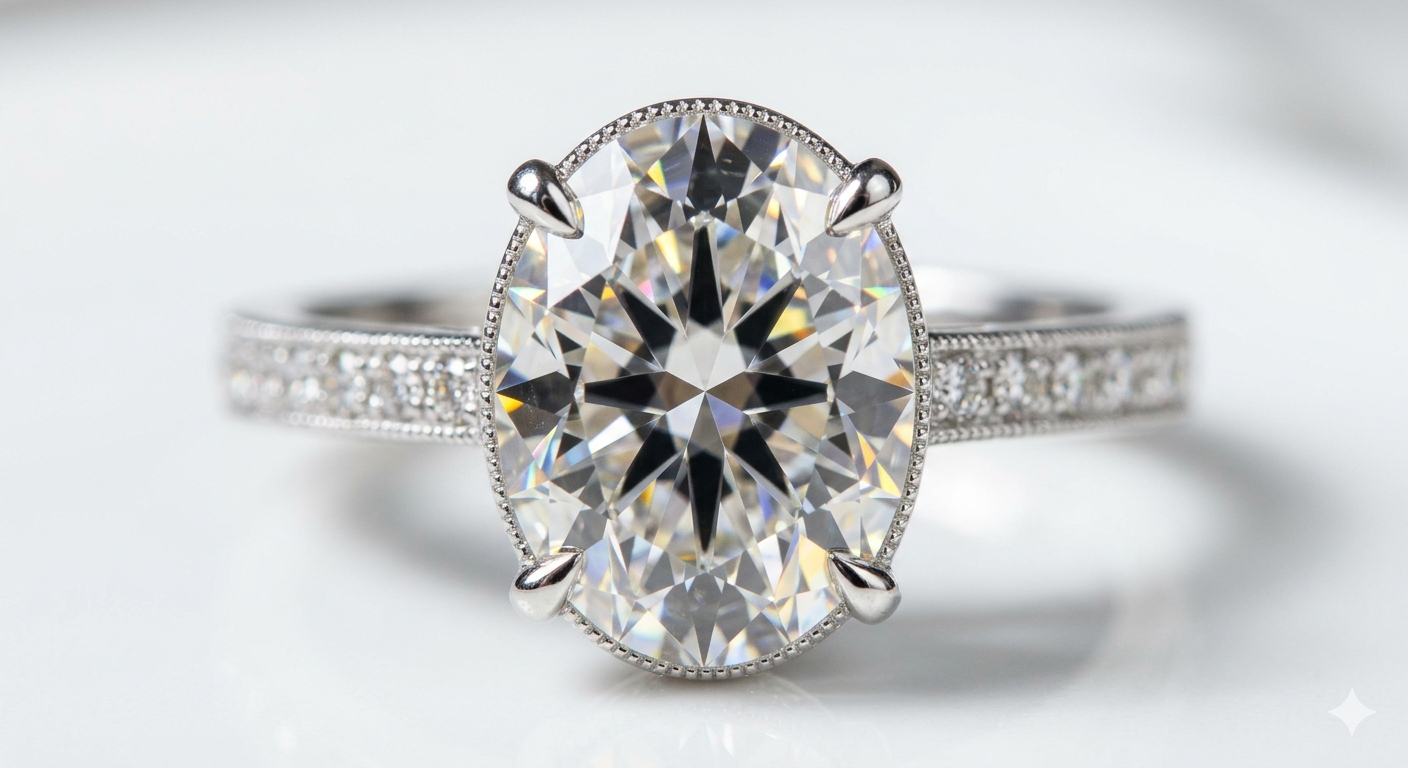
1. Cut: Cut affects how a diamond reflects light. A well-cut diamond can look brighter and more lively than a poorly cut stone.
2. Color: Diamond color grades help show how colorless a stone is. Color preferences depend on personal taste and budget.
3. Clarity: Clarity describes small marks inside or on the surface of a diamond. Many small marks are difficult to see without magnification.
4. Carat: Carat measures diamond weight, not its exact size. Two diamonds with the same carat weight may look different in size.
A smaller, well-cut diamond may look brighter than a larger stone with a weaker cut.
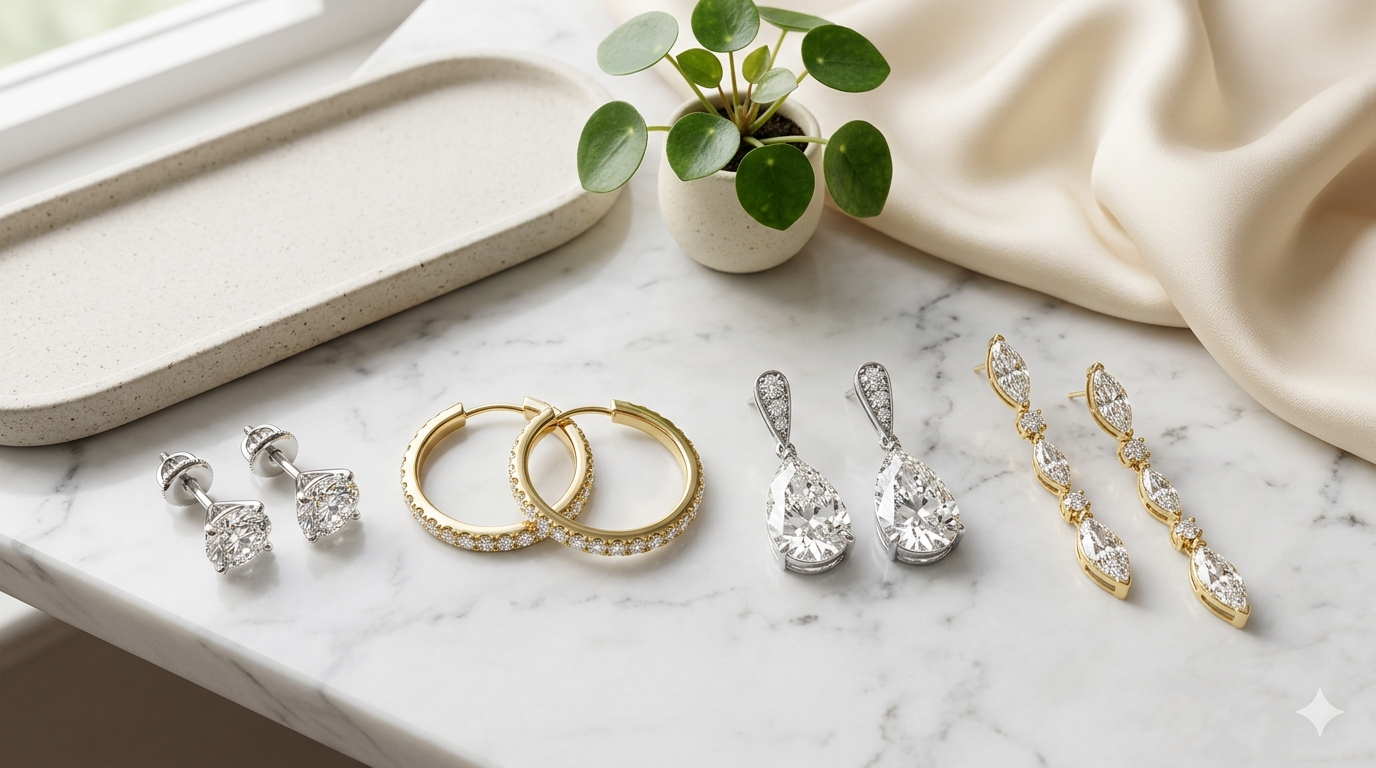
When comparing earrings, check the quality of both stones. The pair should also look balanced in size, color, and sparkle.
Before making a purchase, check these details:
Compare similar cut, color, clarity, and carat details.
Check the total carat weight of the pair.
Confirm whether the price is for one diamond or two.
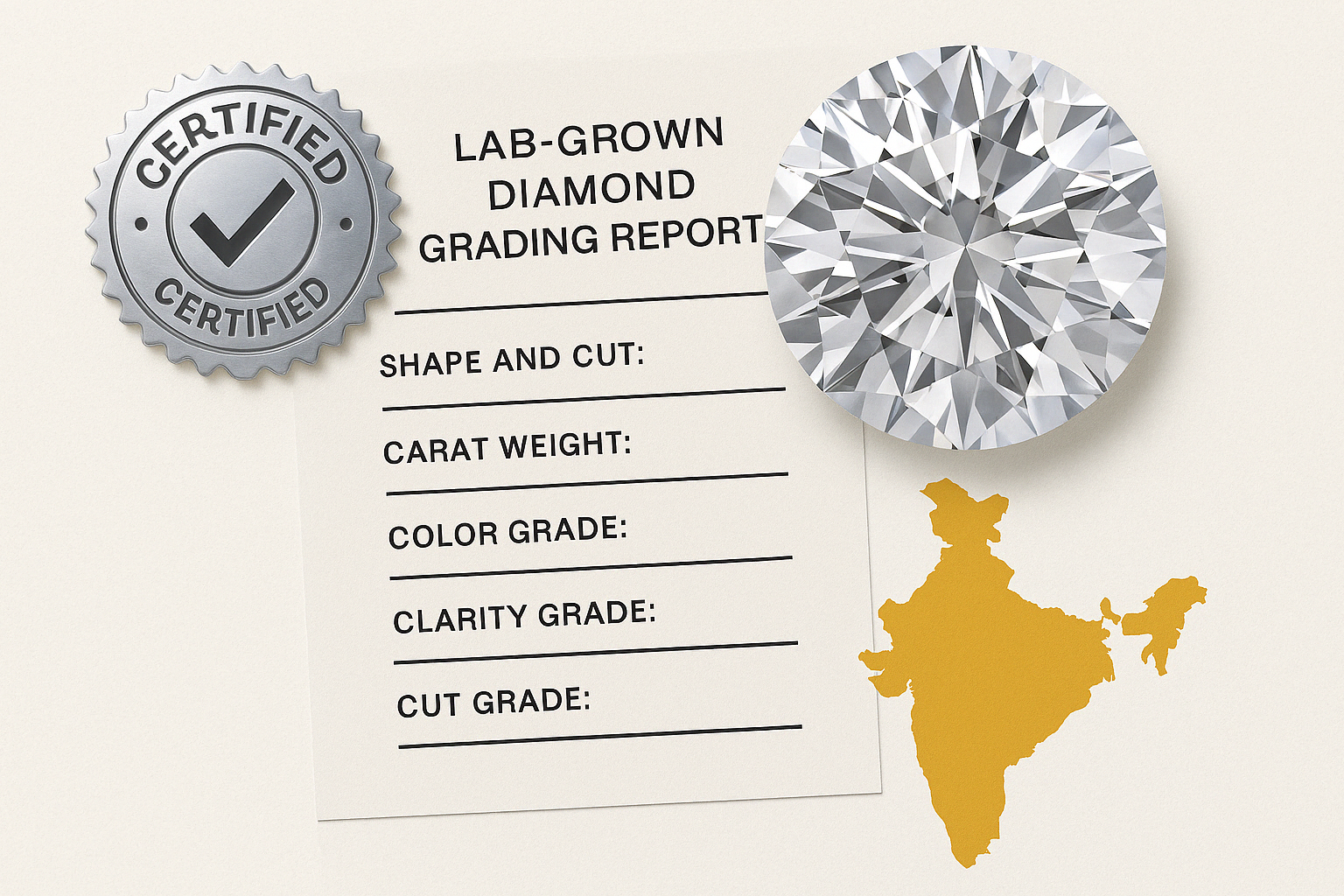
Review grading documents and origin disclosure.
Read the return policy and warranty terms.
Compare the metal, setting, and earring backs.
These small checks can help you avoid confusion and choose with confidence.
Lab grown diamond earrings often cost less than natural diamond earrings with similar quality details.
This price difference can help buyers choose larger stones or better specifications within the same budget.
However, the final price depends on several things:
Diamond size and quality
Metal type, such as gold or platinum
Earring design and setting
Brand name and craftsmanship
Retailer pricing and discounts
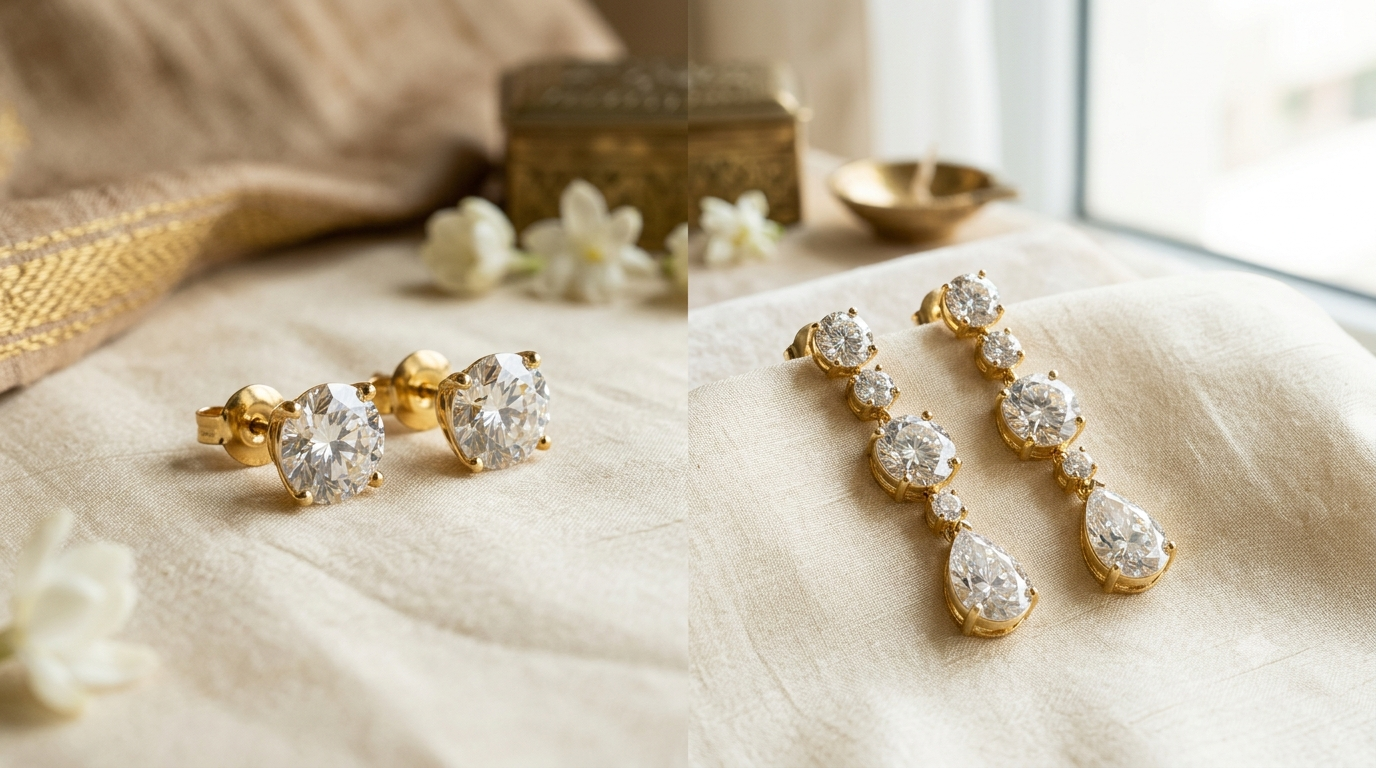
For example, simple diamond studs may cost less than detailed drop earrings with the same total diamond weight.
If you are comparing prices, make sure you are comparing similar products.
A useful price comparison should include two pairs with similar specifications.
For example, compare:
Record the retailer, date checked, final price, and sale terms.
Price comparison note: Prices change often, and a fair comparison needs current, matched product listings. Without verified listings for two equivalent pairs, it would be misleading to give exact prices or savings as a real-world case study.
For a fair comparison, request written quotes from retailers for both pairs, including taxes and any extra charges.
Many people buy diamond earrings as a long-term purchase. However, neither lab-grown nor natural diamonds guarantee a strong resale price.
Resale value depends on demand, quality, condition, brand, and the buyer.
Natural diamonds are not guaranteed to increase in value. Lab grown diamonds can also face resale challenges as production methods and market prices change.
If resale matters to you, ask local jewelers or resale platforms for written offers on comparable earrings. Treat these offers as estimates, not promises.
Natural diamonds form deep inside the Earth under high pressure and temperature over very long periods. They reach the surface through geological processes and are later mined.
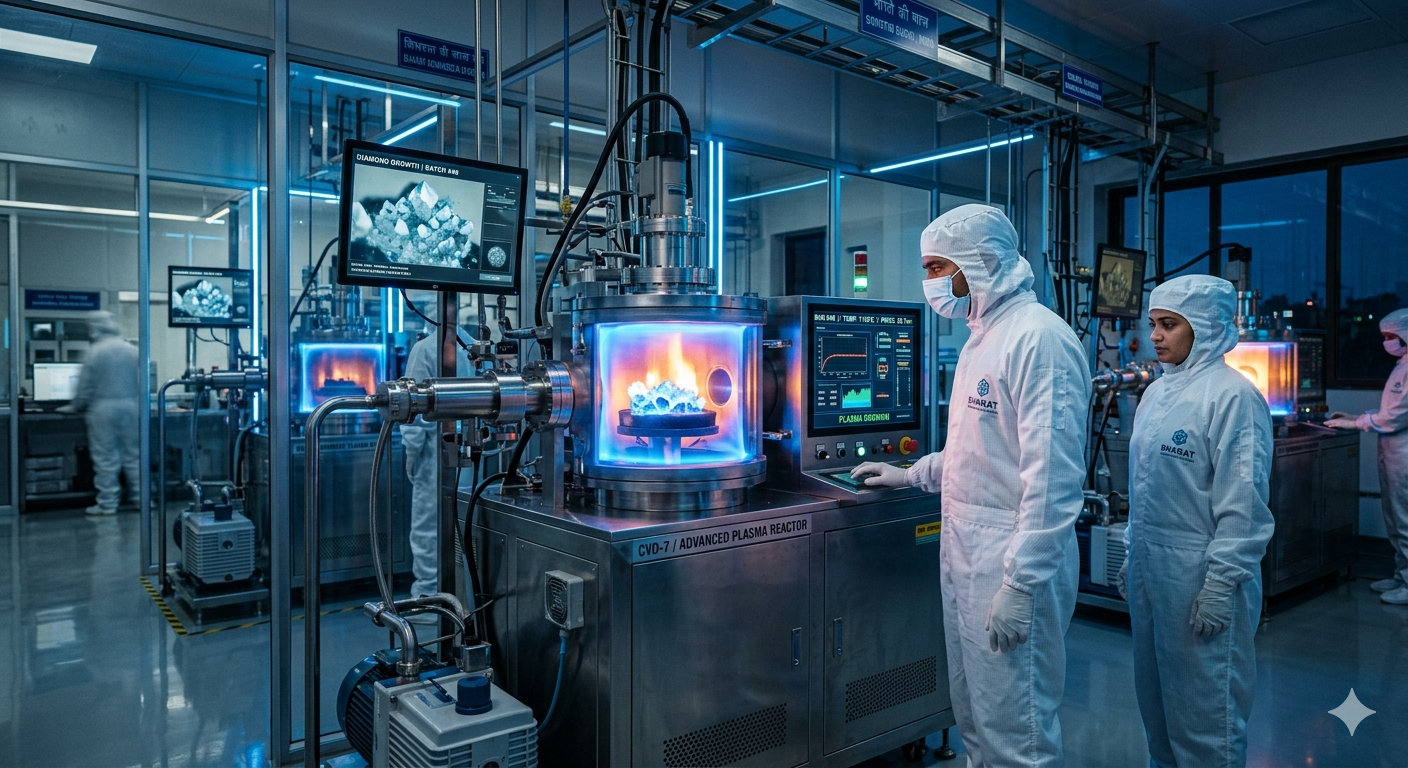
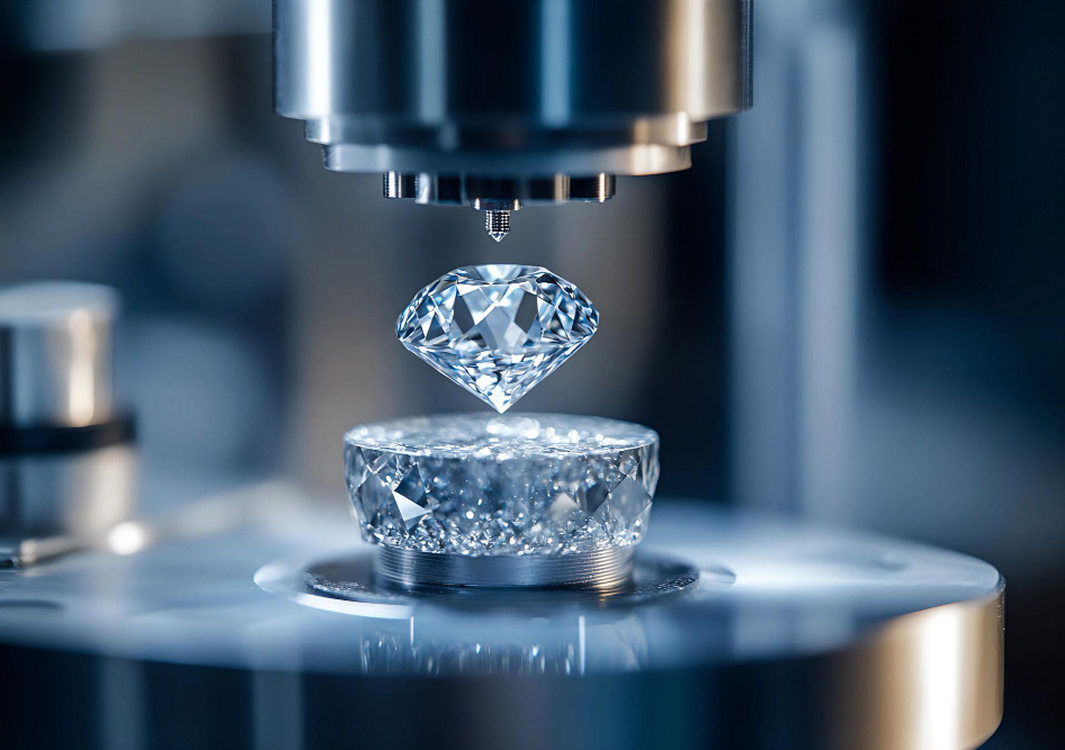
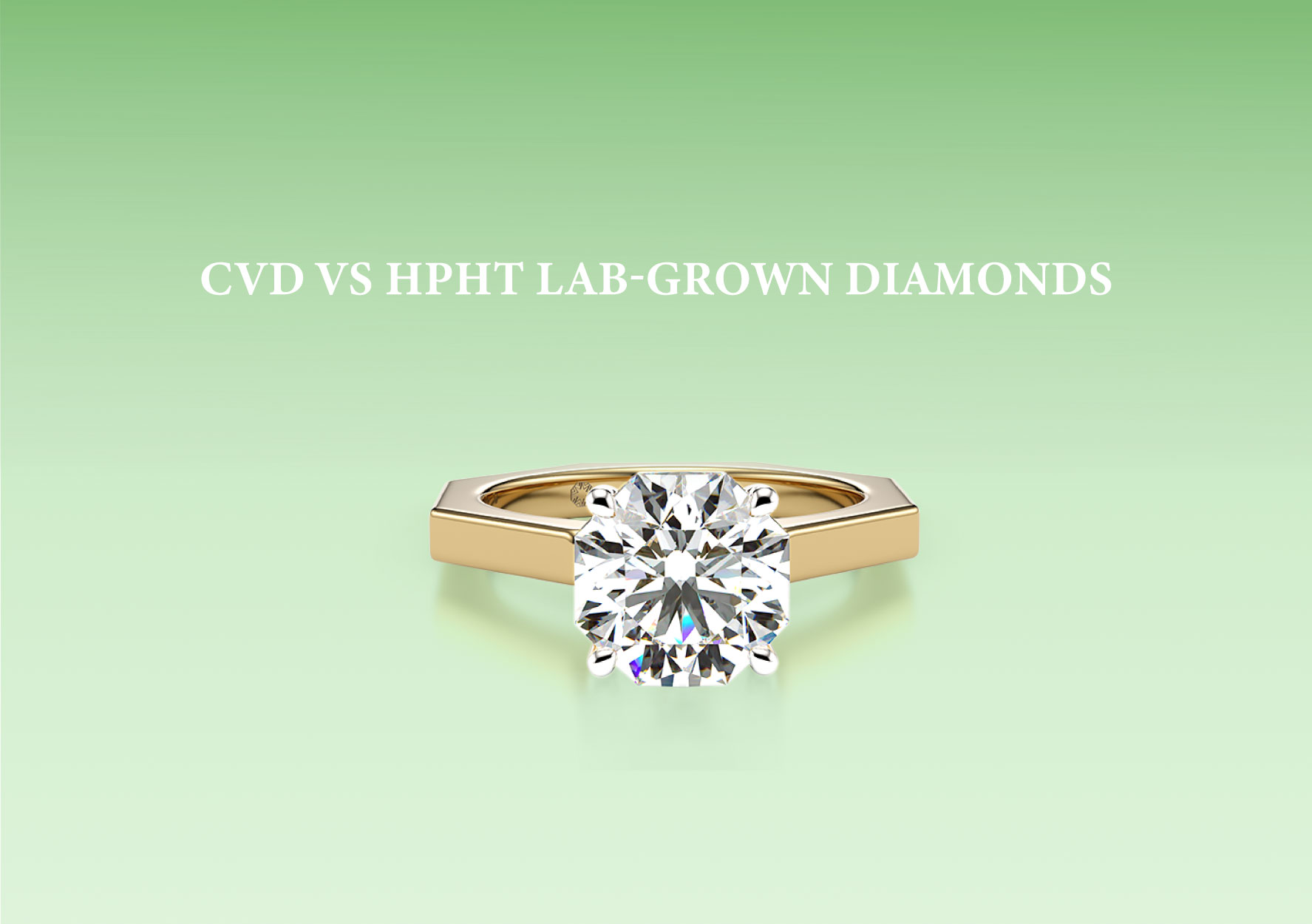
Lab-grown diamonds are made using technology in controlled settings. Two common methods are High Pressure High Temperature (HPHT) and Chemical Vapor Deposition (CVD).
Neither origin automatically tells you everything about a diamond's quality or sourcing.
For natural diamonds, the country of origin and supply chain may matter to buyers. Ask retailers for clear sourcing information and any available supporting documents.
For lab grown diamonds, ask for clear origin disclosure and keep the grading documents with your purchase.
The answer is not always simple.
Lab grown diamond production uses energy, and its environmental impact can change based on the energy source, factory, and production method.
Diamond mining can also affect land, water, local communities, and wildlife. These impacts vary by location and mining practices.
Therefore, avoid believing that every lab grown diamond is automatically eco-friendly or every natural diamond has the same environmental impact.
Look for independent life-cycle studies with clear methods, recent data, and information about energy use, water, and emissions.
In 2018, De Beers announced its Lightbox lab-grown jewelry brand.
According to its May 29, 2018, company announcement, Lightbox planned to sell lab-grown diamonds at $800 per carat for a one-carat stone, with quarter-carat stones starting at $200.
This was a historical launch price, not today's market rate.
The example shows how lab grown diamonds entered the market with a strong focus on affordable jewelry.
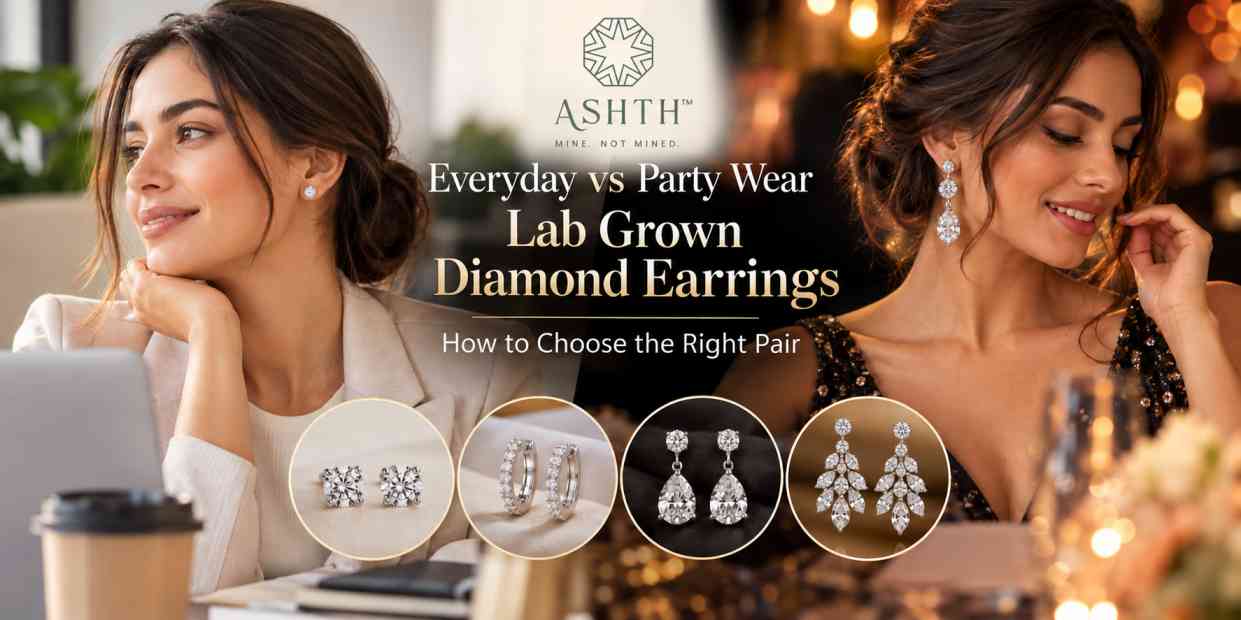
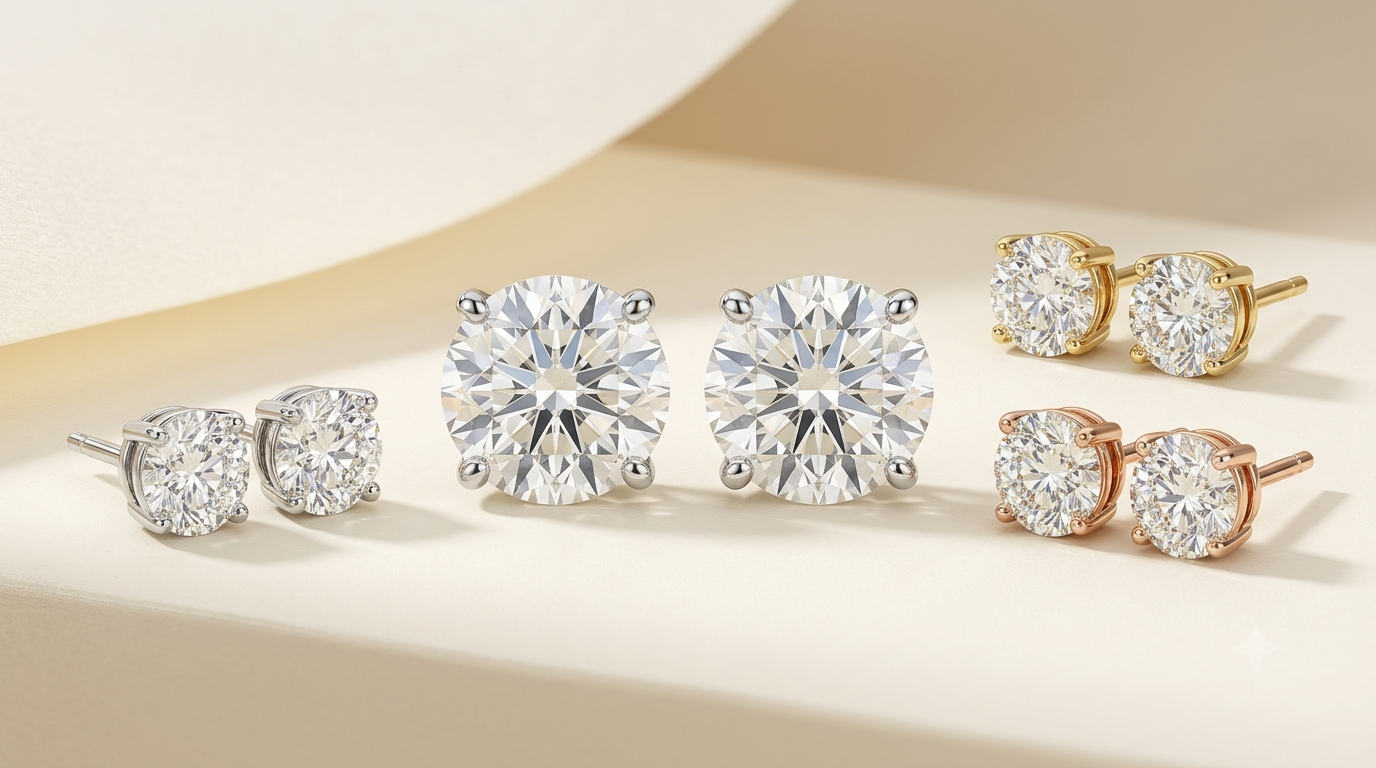
If you plan to wear diamond studs every day, comfort and safety should be important.
Look for:
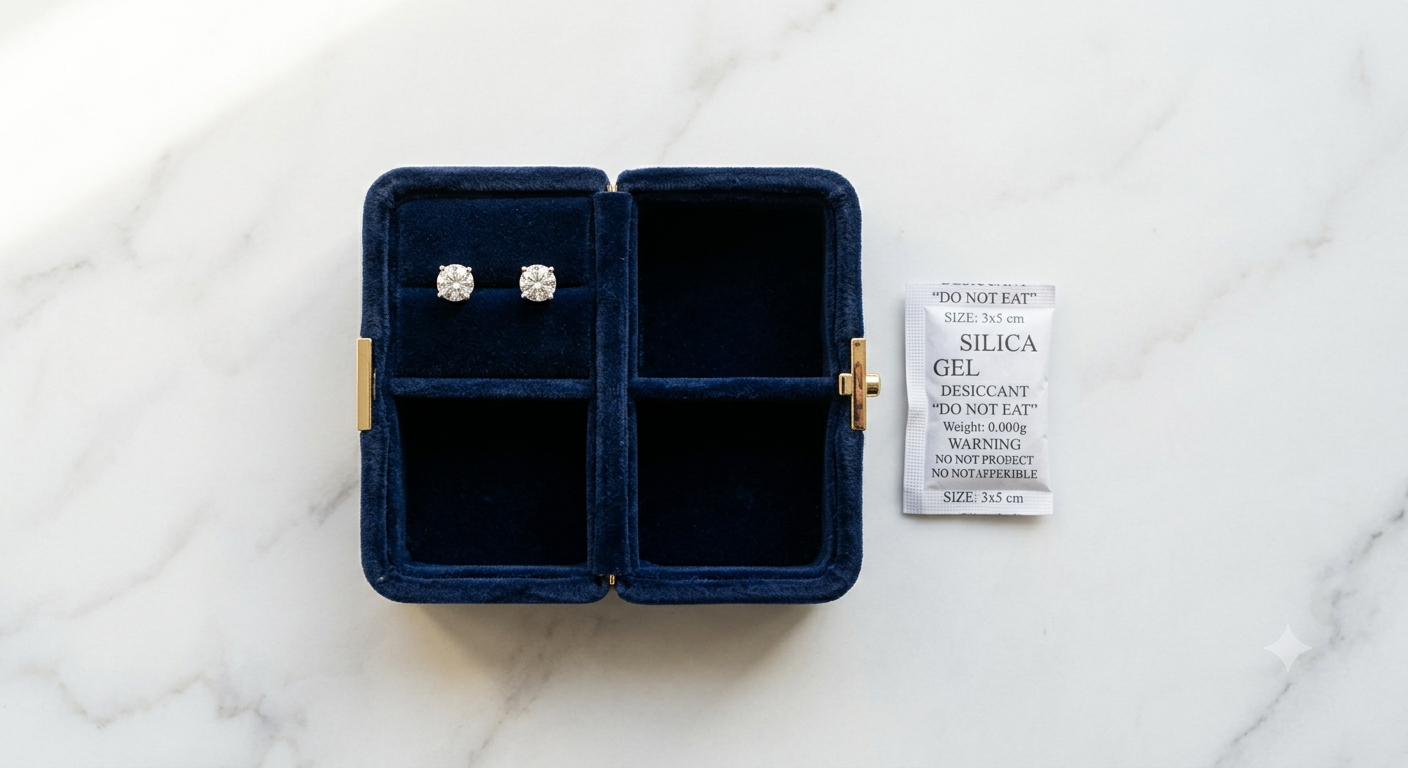
Secure earring backs that fit comfortably.
A setting that does not sit too high.
Smooth edges that will not easily catch on clothes.
A comfortable weight for long hours of wear.
For larger diamonds, ask how the setting protects the edges of the stones.
You can also compare different metal options.
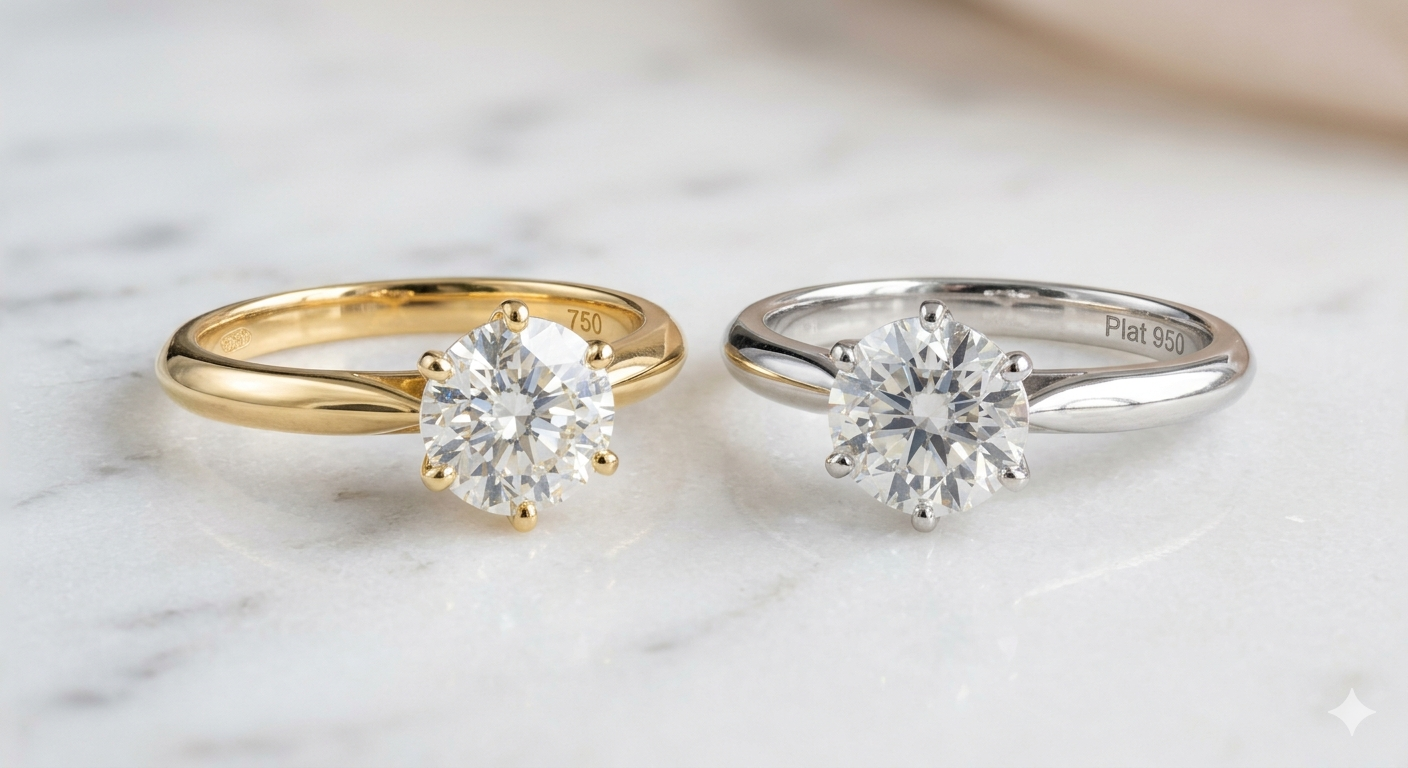
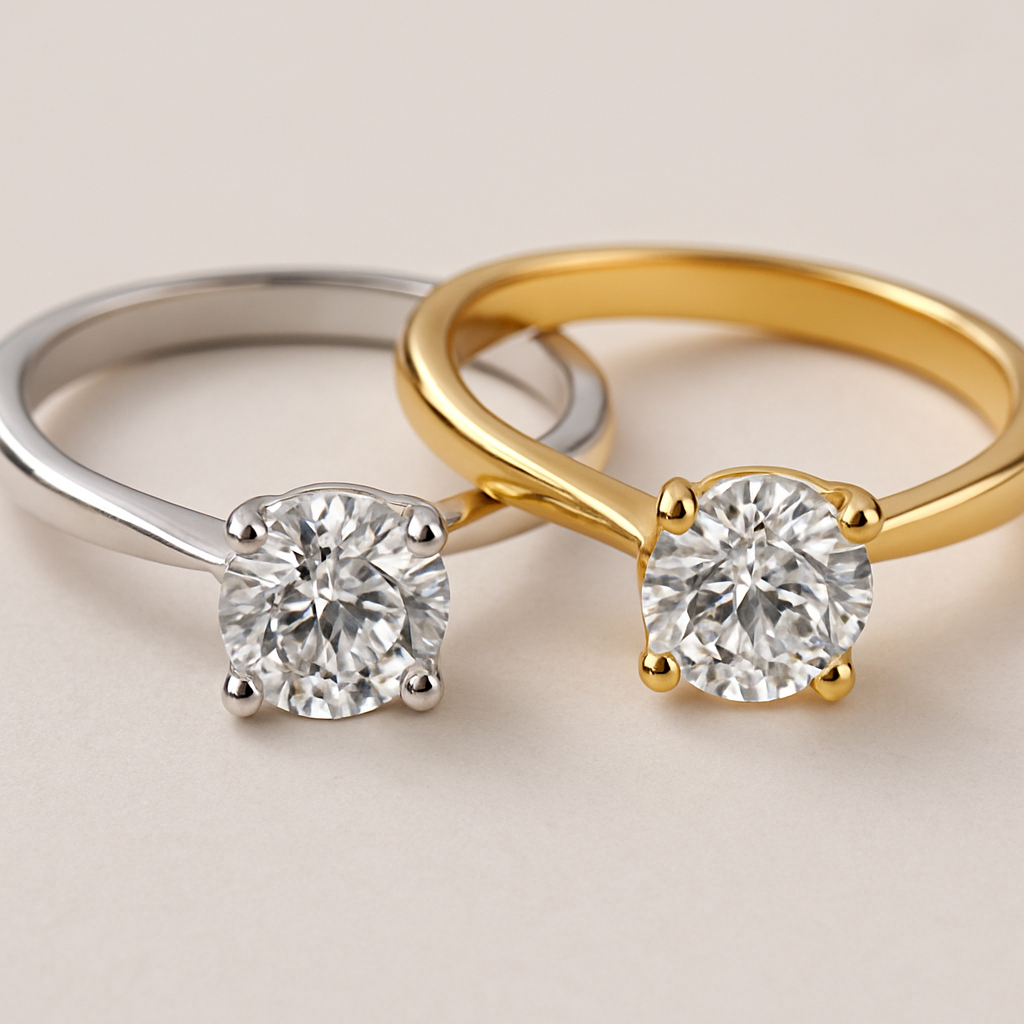
White gold offers a bright, modern look. Yellow gold gives a warm, classic style. Platinum is another popular choice for diamond settings.
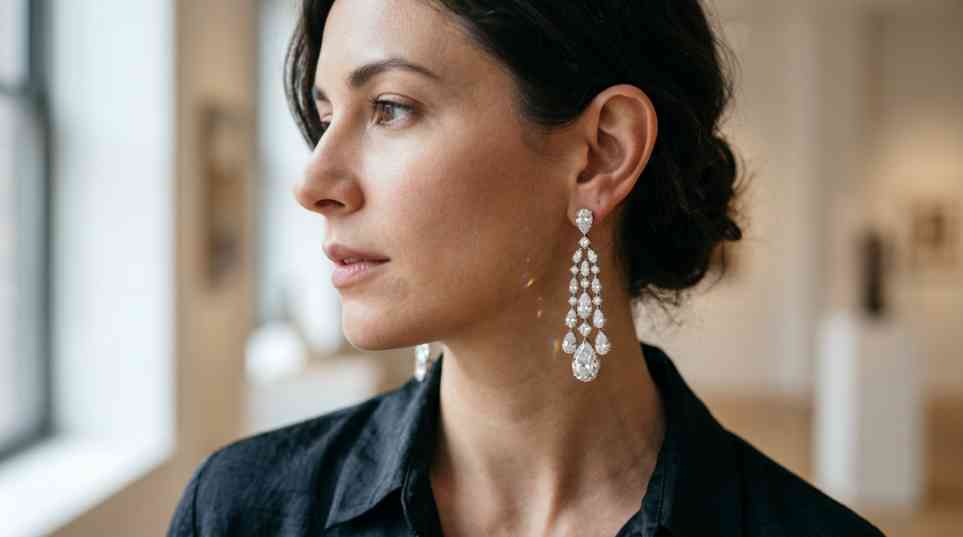
If you enjoy statement jewelry, you may also explore [long diamond earrings] for parties and special events.
For a different design, [two stone earrings] can offer a stylish look without choosing traditional diamond studs.
Before placing your order, follow these steps:
Set a total budget, including taxes and any appraisal costs.
Ask whether the diamonds are natural or lab-grown.
Check the grading documents and diamond specifications.
Review the return policy and warranty coverage.
Check the metal quality and setting details.
Inspect both earrings for a close match in color, size, and sparkle.
You can also learn more about [Which Diamond Colour Grade Is Best for Lab Grown Diamond Earrings?] before selecting your preferred color.
Taking a little time to compare can help you avoid an expensive mistake.
Choose lab-grown diamond earrings if:
You want to spend less for similar diamond specifications.
You prefer larger stones within your budget.
You care more about appearance and everyday wear than mined origin.
Choose natural diamond earrings if:
You value a diamond's natural origin.
The story of a mined diamond matters to you.
You are comfortable with the price of your preferred pair.
Consider another option if:
Neither choice fits your budget. You can choose smaller diamonds, a simpler setting, or save for the pair you really want.
There is no need to stretch your budget just to follow a trend.
Lab grown and natural diamond earrings can both be beautiful choices.
Lab-grown diamonds often offer a lower price, while natural diamonds offer a mined origin and a different personal meaning.
However, origin is only one part of the buying decision. Diamond quality, comfort, craftsmanship, documentation, and price also matter.
Before buying, compare two similar pairs, check the grading details, and read the return and warranty terms carefully.
The best diamond earrings are not simply the most expensive or the biggest ones. They are the pair that fits your style, your budget, and your personal priorities.
Yes, lab grown diamond earrings contain real diamonds. They have essentially the same chemical composition and main physical properties as natural diamonds. They are different from diamond lookalikes, such as cubic zirconia.
It depends on your needs. Lab grown diamond earrings are often more affordable and can offer larger stones for the same budget. Natural diamond earrings may be a better choice if you value a diamond's mined origin. Both can be beautiful options.
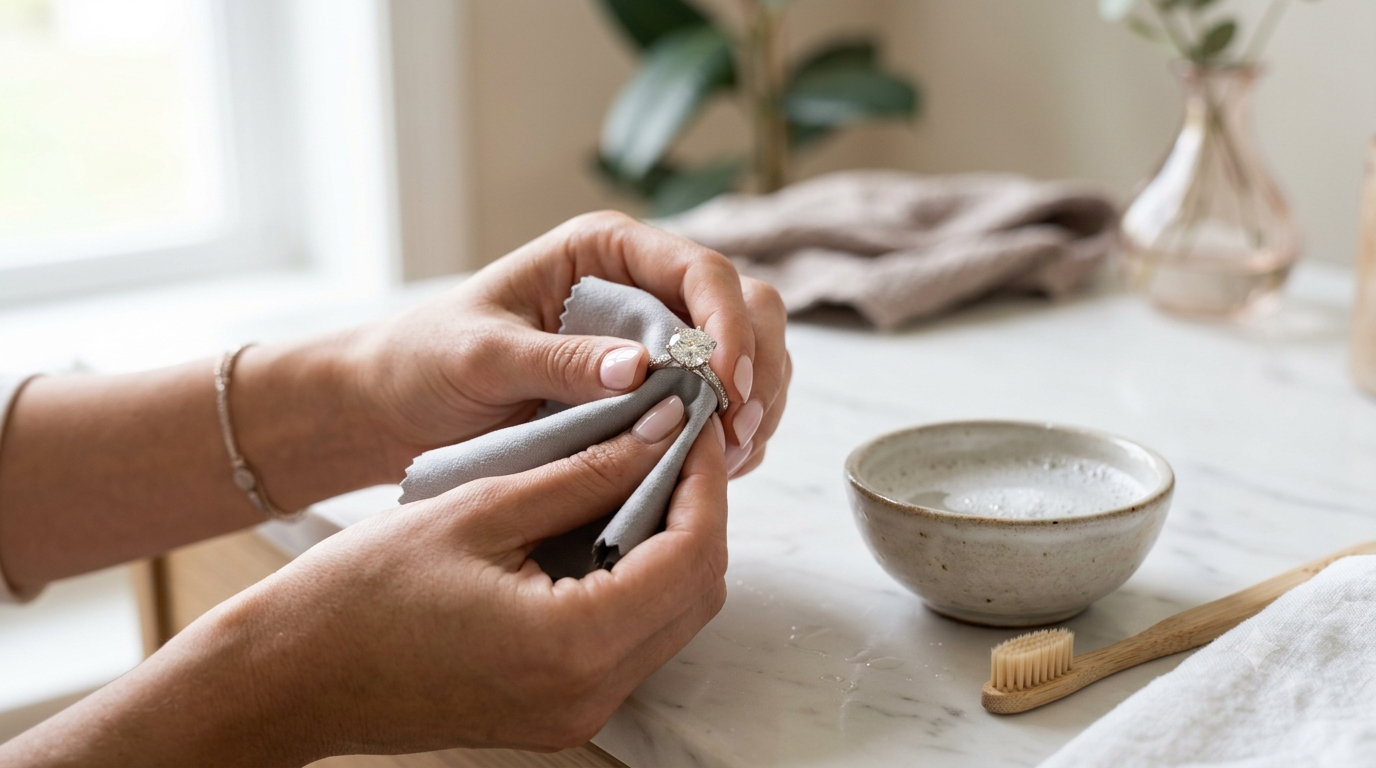
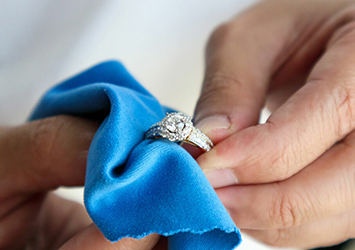
Diamonds can keep their beauty for many years with proper care. However, dirt, oil, and product buildup can make earrings look dull. Regular cleaning with a suitable method can help maintain their sparkle.
Yes, lab grown and natural diamonds have essentially the same hardness and main physical properties. Both score 10 on the Mohs hardness scale. Still, either type can chip or break if hit in the wrong way.
Lab grown diamond earrings may have resale value, but the amount can vary. Resale prices depend on quality, demand, condition, and market trends. Do not buy diamond earrings only because you expect their value to increase.

 Round
 Pear
 Heart
 PRINCESS
 Oval
 CUSHION
 EMERALD
 MARQUISE
 Asscher
 RADIANT
 Ashth CUT
 ROSE CUT
 BRIOLETTE
 SINGLE CUT
 TRAPEZIUM
 TULIP
 TRIANGLE
 BUTTERFLY
 FLOWER
 MOVAL
 CLOVER
 BAGUETTE
 9KT ASHTH CUT
 9KT MARQUISE
 9KT PEAR
 9KT RADIANT
 9KT EMERALD