Ashth - Where Exceptional Craftsmanship Defines Modern Luxury !

- Rings
- Earrings
Shop By Category
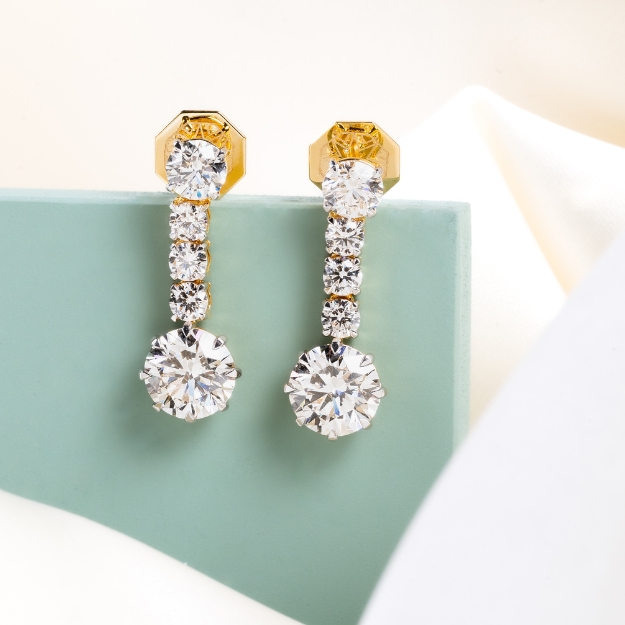
- Bangles/ Bracelets
Shop By Category
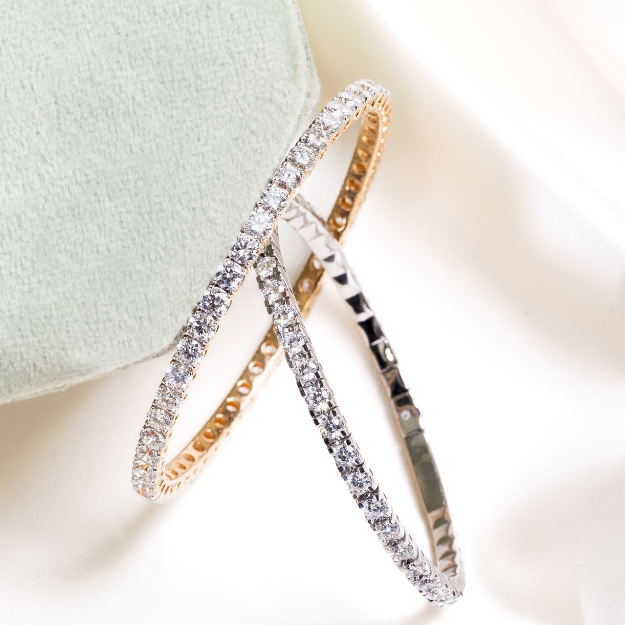
- Necklaces
Shop By Category
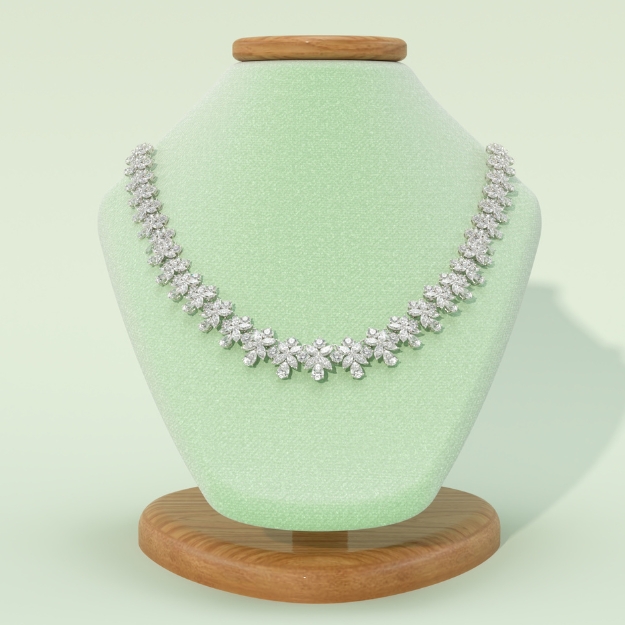
- Pendants
Shop By Category
- ASHTH LITE
Shop By Category
.jpg)
- Collections
Collections
Shop By Category
Shop By Category
Shop By Category
Shop By Category
Shop By Category
Collections
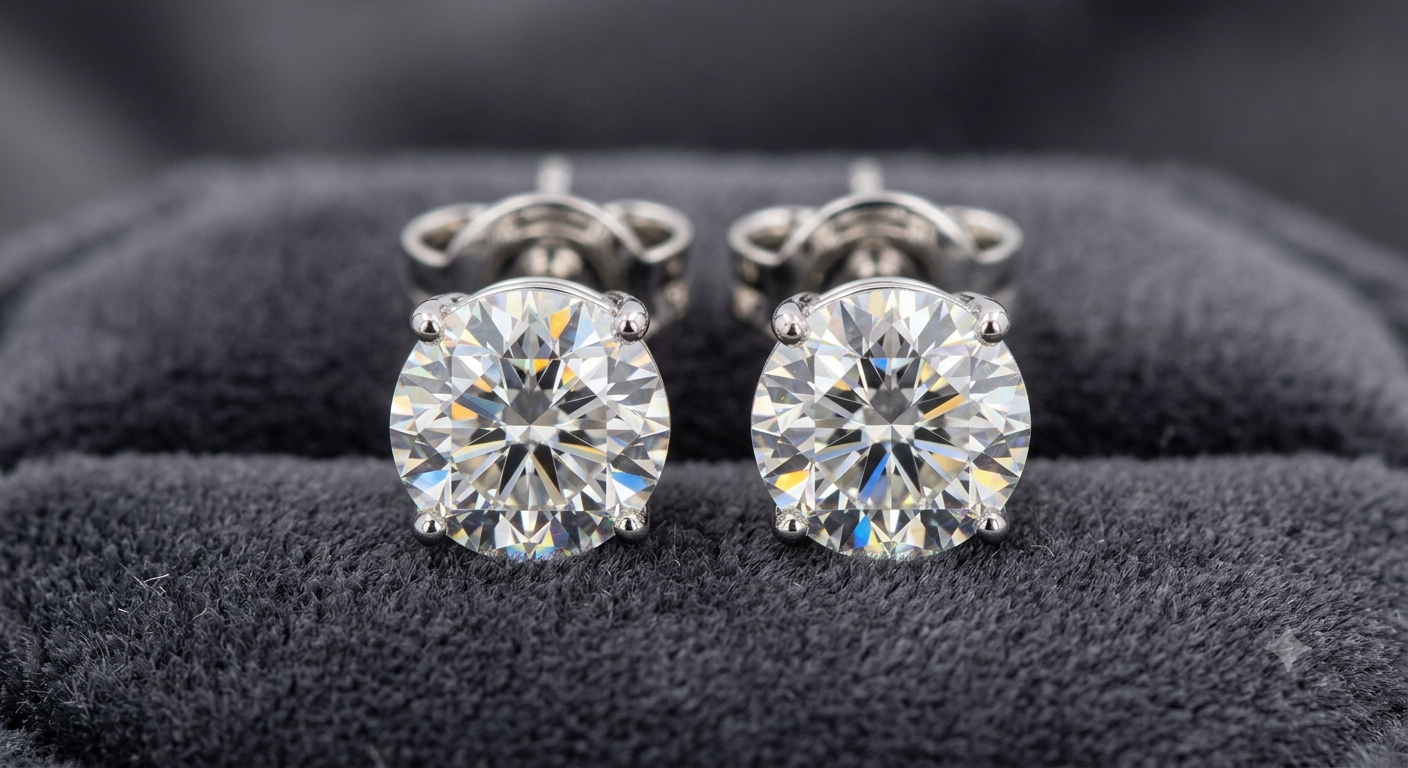
Buying diamond earrings should feel exciting, not confusing. But once you start comparing options online, the sparkle can start to blur together. Every listing claims to be "premium" or "top quality," and it's hard to know what that actually means.
If you're wondering how to tell if lab grown diamond earrings are high quality, the short answer is this: quality comes down to how well the diamond is cut, how clean and colorless it looks to the eye, how it's certified, and how carefully it's set into the metal. A high-quality pair will show even light performance, secure backings, and clean craftsmanship under close inspection. A lower-quality pair may look fine in a photo but fall short in person.
I've spent years helping people choose diamond earrings for engagements, gifts, and everyday luxury. The questions don't change much, but the confidence to ask them does. This guide walks through exactly what to look for, what professionals check, and where buyers tend to go wrong.
What Makes Lab Grown Diamond Earrings High Quality?
The Most Important Signs of High Quality
Common Mistakes Buyers Make
Questions to Ask Before Buying
Lab Grown vs Natural: Does Quality Differ?
Expert Buying Checklist
FAQs
Conclusion
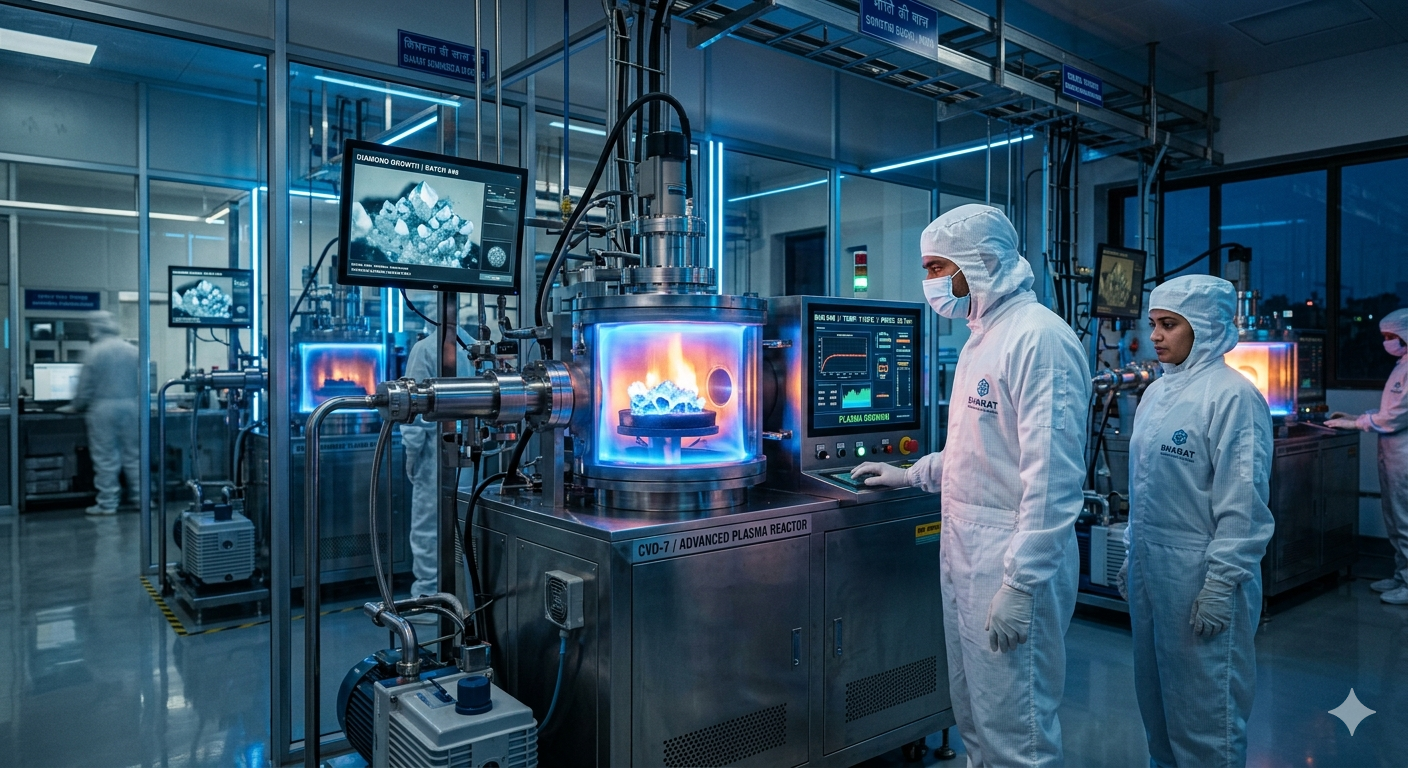
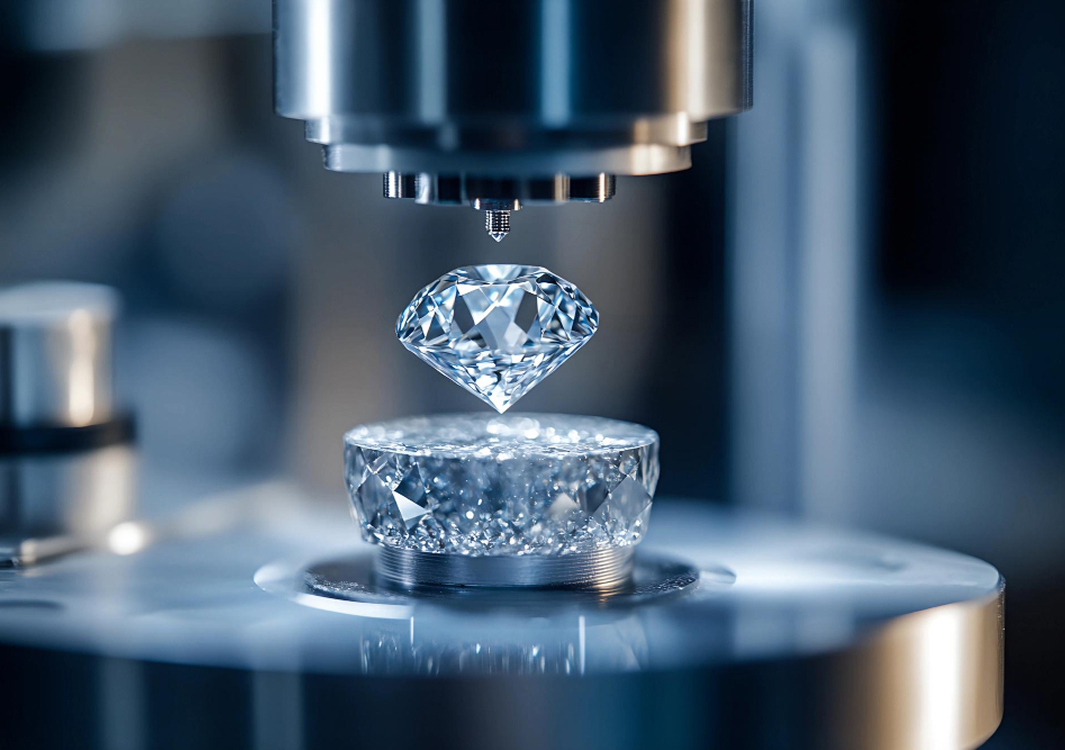
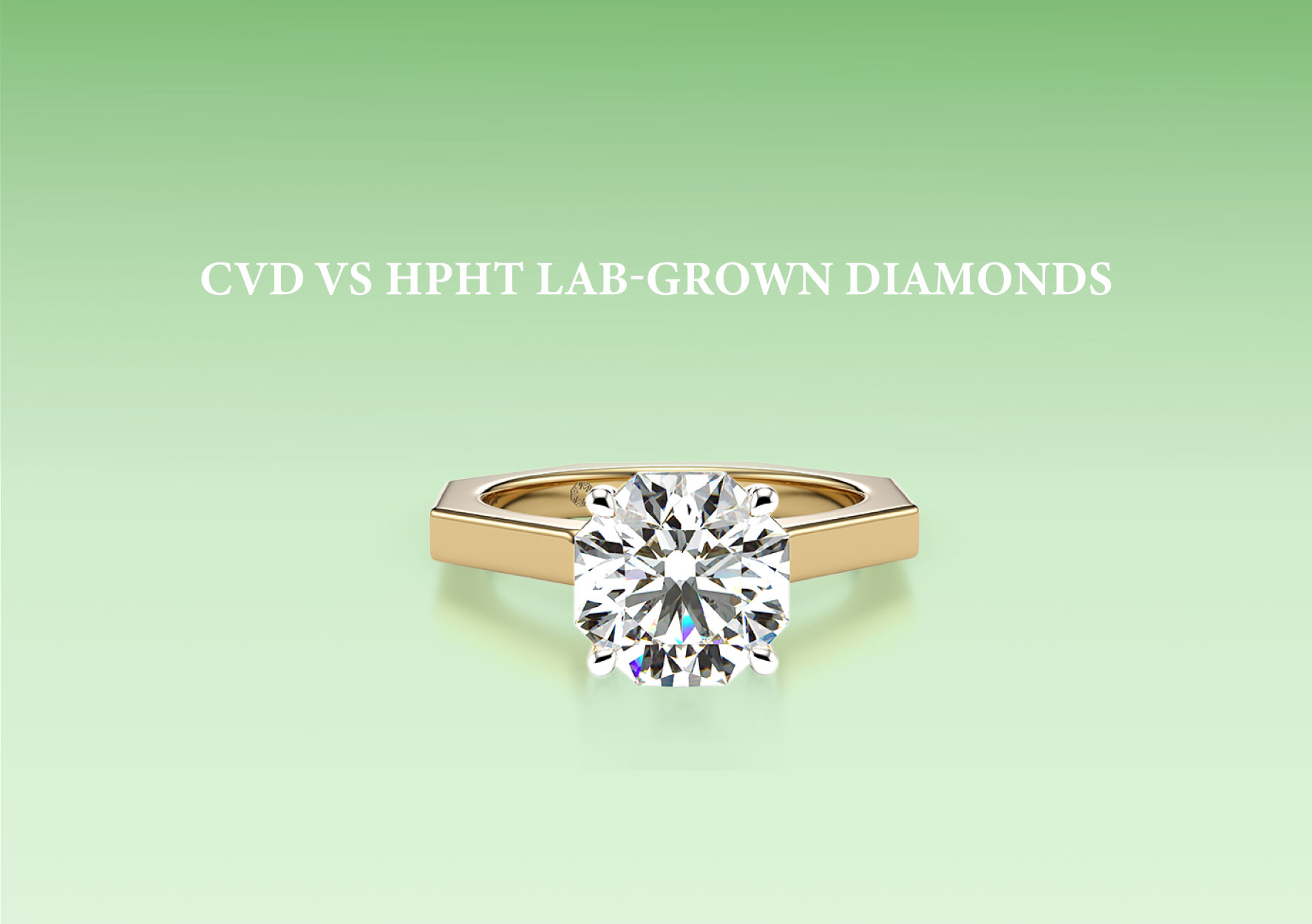
Lab grown diamonds are chemically, physically, and optically identical to natural diamonds. The difference is in how they form. Natural diamonds crystallize underground over billions of years. Lab grown diamonds are created in controlled lab environments using processes like CVD (Chemical Vapor Deposition) or HPHT (High Pressure High Temperature), which replicate the same conditions in a much shorter timeframe.
Because the diamond itself is real, quality still comes down to the same factors jewelers have used for decades: cut, clarity, color, and carat weight, along with certification, metal quality, and how well the piece is constructed.
High quality diamond earrings share a few things in common, regardless of price point:
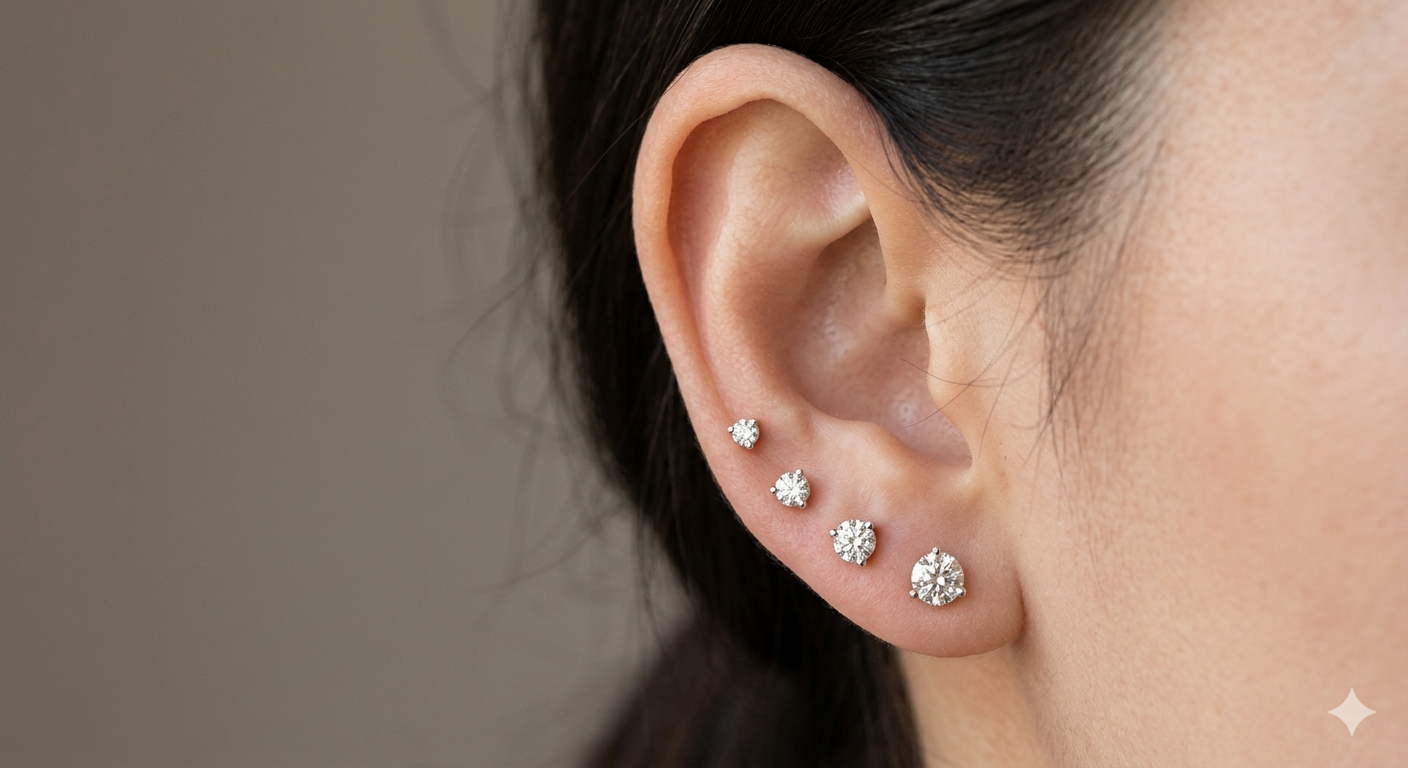
The diamonds are cut with precision, not just "good enough" proportions
Certification comes from a recognized grading laboratory, not a vague in-house claim
The metal setting is solid, not thin or hollow where it shouldn't be
Prongs or bezels hold the stone securely, with no visible gaps
The backing is sturdy enough for daily wear, not just display
Matching earrings actually match in size, color, and sparkle
None of this is complicated once you know what to check. The tricky part is that a lot of it isn't obvious from a product photo.
When examining diamond earrings, professionals don't just glance at the carat weight and move on. They work through a mental checklist. Here's what that checklist actually includes.
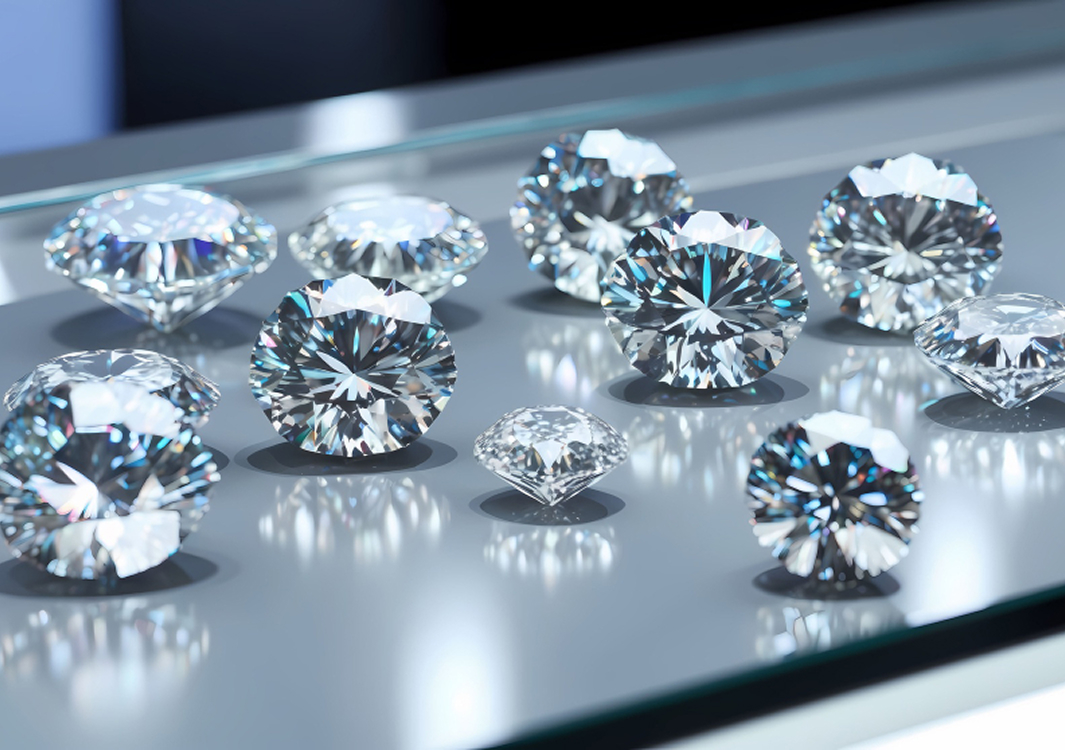
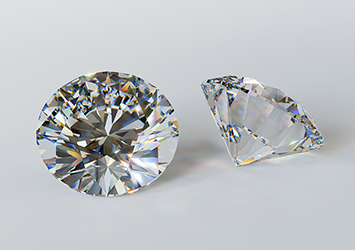
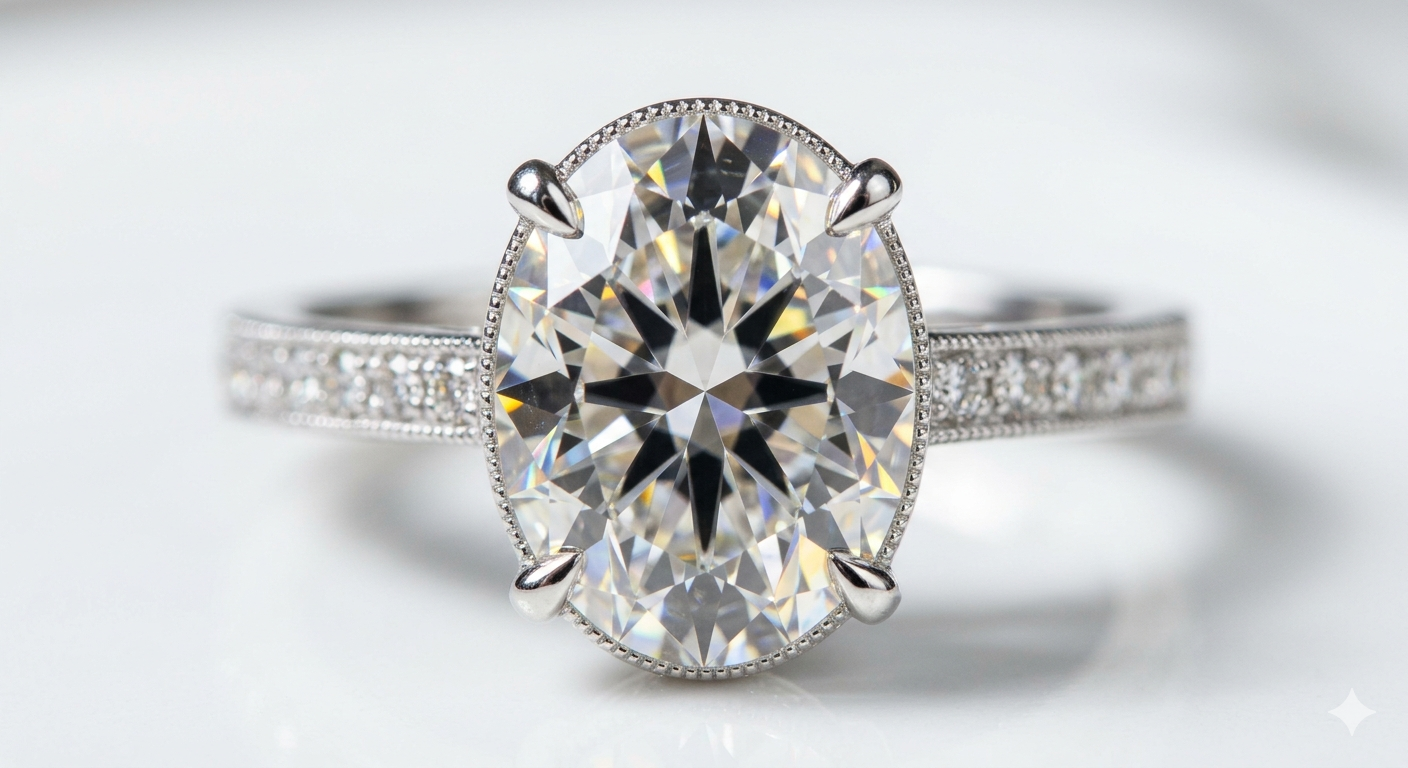
Diamond cut affects sparkle more than any other factor. A well-cut diamond reflects light back through the top of the stone, creating brightness, fire, and contrast. A poorly cut diamond can look dull even with excellent clarity and color, because light leaks out the sides or bottom instead of bouncing back to your eye.
One thing I often recommend is asking for the cut grade specifically, not just the shape. "Round brilliant" describes the shape. "Excellent cut" or "Ideal cut" describes the proportions. These are not the same thing, and buyers mix them up constantly.
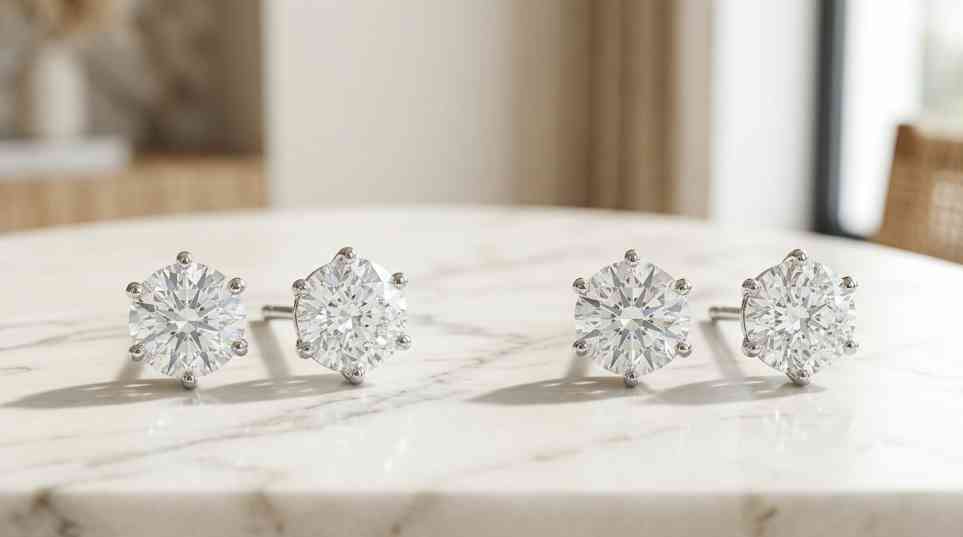
If you're shopping online, look at how the diamond earrings are photographed under different lighting. High quality stones hold their brilliance even in soft, indirect light. Weaker cuts tend to look flat unless they're under a spotlight.
Diamond clarity refers to internal characteristics called inclusions and external ones called blemishes. Almost every diamond has some, even the ones sold as "flawless" to the naked eye. What matters is whether these characteristics affect the stone's appearance or structural integrity.
For earrings, eye-clean clarity (typically VS2 to SI1 range) is usually the sweet spot. Anything visibly cloudy or included when viewed without magnification should be a red flag, no matter how the listing describes it. A common mistake people make is assuming a higher clarity grade always means a better-looking stone. Past a certain point, the difference is invisible to anyone without a loupe.
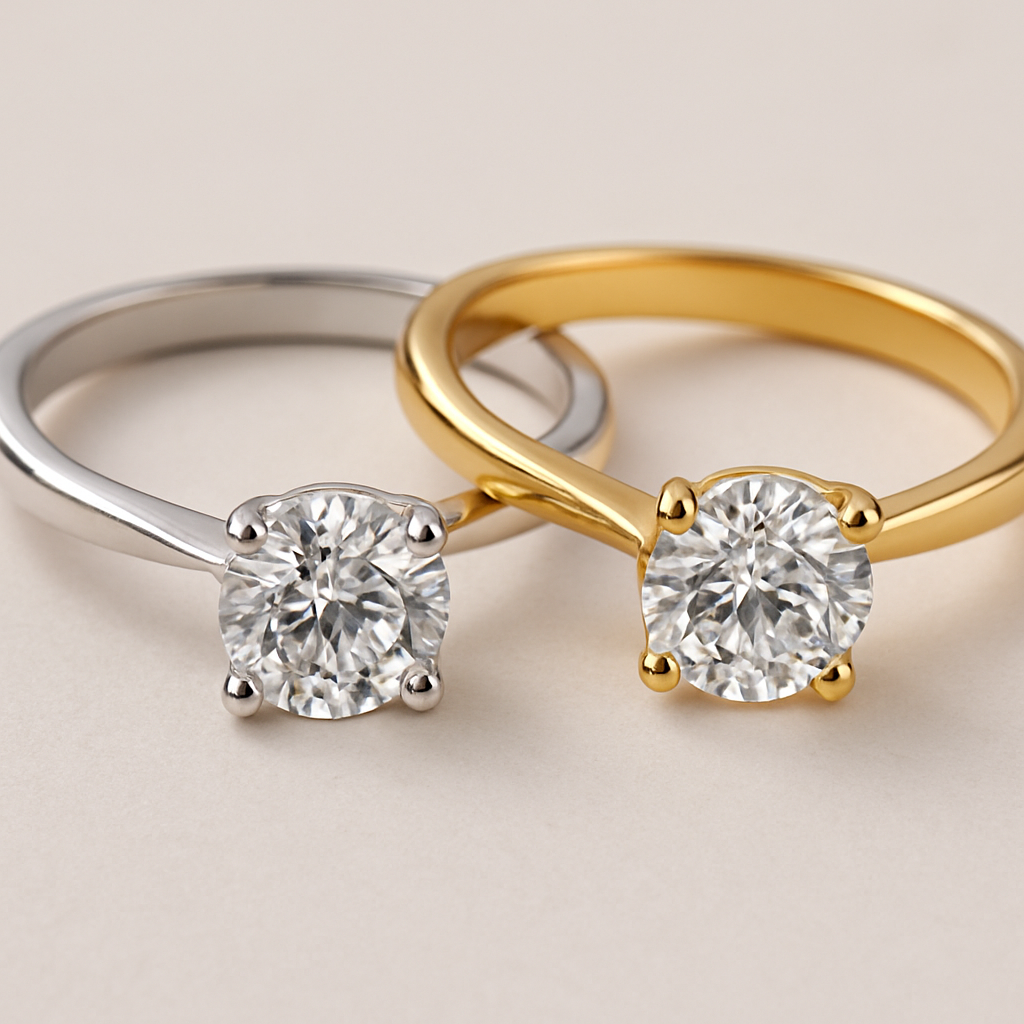
Diamond color is graded on a scale from D (colorless) to Z (noticeably yellow or brown). For white gold or platinum settings, a color closer to D–F will look crisp and icy. For yellow or rose gold settings, slightly warmer colors in the G–I range often blend beautifully and are more budget-friendly.
Many buyers overlook how much the metal color affects perceived diamond color. A stone that looks slightly warm in white gold might look perfectly white in yellow gold, simply because of contrast. This is worth discussing with whoever you're buying from before assuming a stone is "off."
Carat measures weight, not size or quality. Two diamonds of the same carat weight can look different in diameter depending on how they're cut. A shallow cut can appear larger face-up but sacrifice brilliance. A well-proportioned cut may look slightly smaller but sparkle far more.
For earrings specifically, total carat weight (the combined weight of both stones) matters as much as individual stone size. Always check whether a listing shows carat weight per earring or total weight for the pair. This detail changes the price and the visual impact significantly.
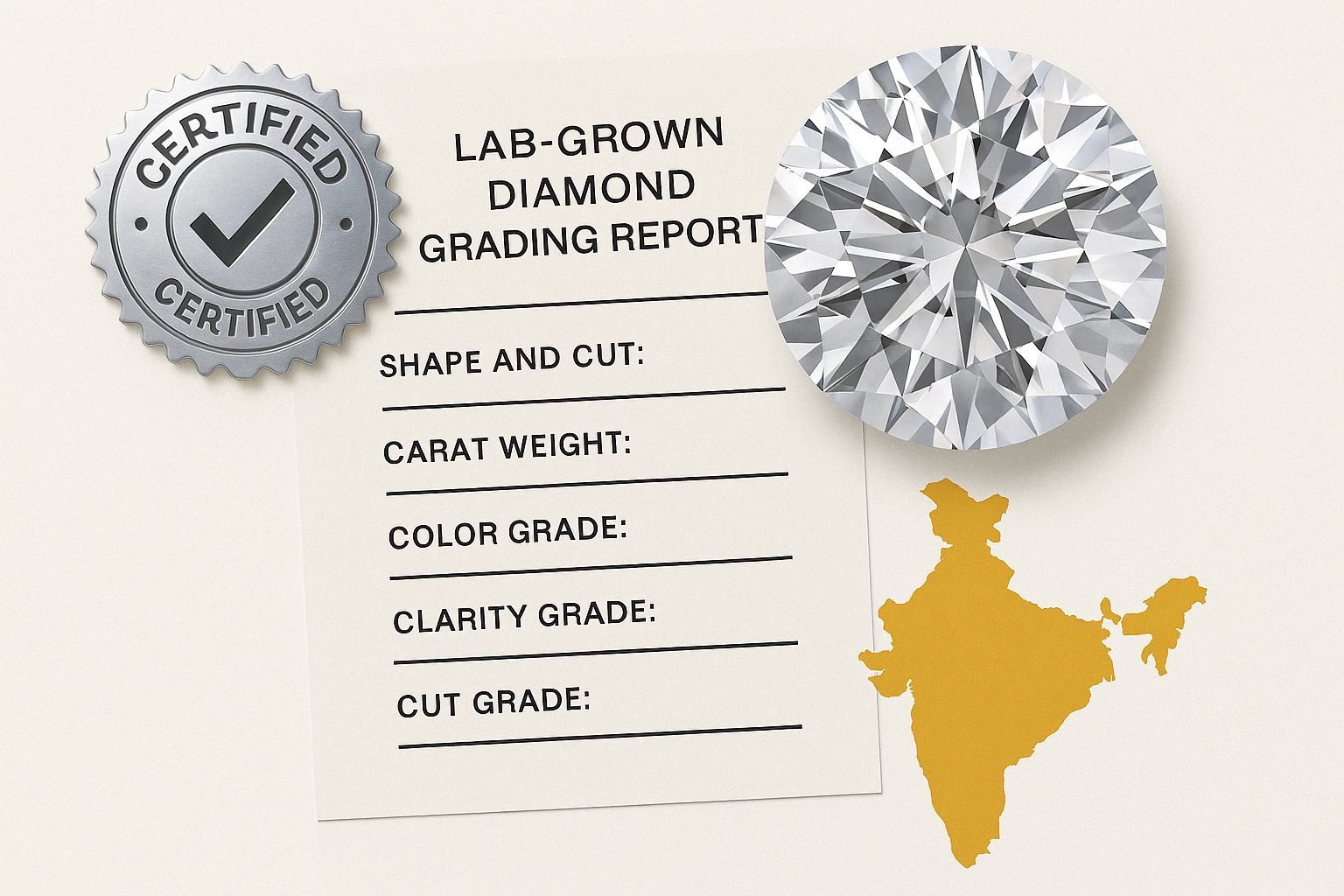
This is one of the clearest ways to verify quality. Reputable lab grown diamonds should come with certification from an established grading laboratory. IGI (International Gemological Institute) is the most common lab for grading lab grown diamonds, and GIA (Gemological Institute of America) certifies both natural and lab grown stones as well.
A certificate should include the cut, clarity, color, and carat weight, along with a unique report number you can verify independently on the lab's website. If a seller can't provide this, or the "certificate" is a generic in-house document, treat that as a warning sign rather than reassurance.
IGI certified lab grown diamonds have become something of an industry standard for exactly this reason. The certification process is consistent, and the reports are verifiable by anyone, not just the buyer.
Diamond earring craftsmanship is where a lot of quality differences hide in plain sight. This covers how the setting is constructed, how clean the metalwork looks around the stone, and whether the piece feels solid or lightweight in a way that suggests thin, low-quality metal.
A simple trick professionals use is turning the earring over and looking at the back of the setting. Clean, even soldering and a well-finished gallery (the underside structure holding the stone) usually indicate a jeweler who pays attention to details that customers might never think to check.
Most fine hoop diamond earrings use 14K or 18K gold, platinum, or occasionally 10K gold for a more affordable option. Higher karat gold is softer but more valuable and hypoallergenic-friendly for many people. Lower karat gold is more durable for daily wear but contains more alloy metals, which can be an issue for sensitive skin.
Always confirm the metal purity, ideally with hallmarking, and check whether the piece is solid gold or gold-plated. Plated pieces are not necessarily poor quality, but they wear differently over time and should be priced accordingly.
This is one of the most practical things a jeweler checks, and one buyers almost never think about until an earring is lost. Prongs should be even, snug against the stone, and free of sharp or rough edges. Bezel settings should fully encircle the stone with no visible gaps.
When examining diamond earrings in person, gently press on the stone (without excessive force) to feel if there's any movement. A loose stone in a brand-new piece is a manufacturing defect, not something you should have to accept.
Polish refers to the smoothness of the diamond's facets. Symmetry refers to how precisely those facets align with each other. Both affect how light travels through the stone. Poor polish can create a hazy appearance, while poor symmetry can cause light to scatter unevenly, dulling the overall brilliance.
These details are usually listed on a certification report as separate grades. Excellent or Very Good ratings in both categories are a strong sign of careful cutting, not just a large carat number.
For earrings specifically, this is a detail unique to pairs. The two diamonds should match closely in size, shape, color, and clarity. A noticeable mismatch, where one earring catches more light than the other, is a sign of rushed manufacturing or mismatched inventory being paired together to save cost.
Ask to see both earrings photographed together, ideally under the same lighting, before finalizing a purchase.
Even careful shoppers fall into a few predictable traps.
Focusing only on carat weight and ignoring cut quality entirely
Assuming "certified" always means independently graded, when some certificates are generated in-house
Buying based on a single photo without asking for a video showing sparkle in motion
Overlooking the backing style, which affects both comfort and security
Not asking about return or exchange policies before purchasing online
Assuming lab grown automatically means lower quality, which isn't accurate
Every one of these mistakes is avoidable with a few direct questions before checkout.
Whether you're shopping in person or online, these questions separate a reputable seller from a risky one:
Is this diamond independently certified, and by which laboratory?
What is the cut, clarity, and color grade for each stone?
Is the total carat weight per earring or combined for the pair?
What metal is used, and is it solid or plated?
What type of backing does the earring use, and is it replaceable?
What is the return or exchange policy if the earrings don't match the description?
Can I see the earrings under natural light, not just studio lighting?
A seller who answers these clearly and specifically, rather than vaguely, is generally one you can trust.
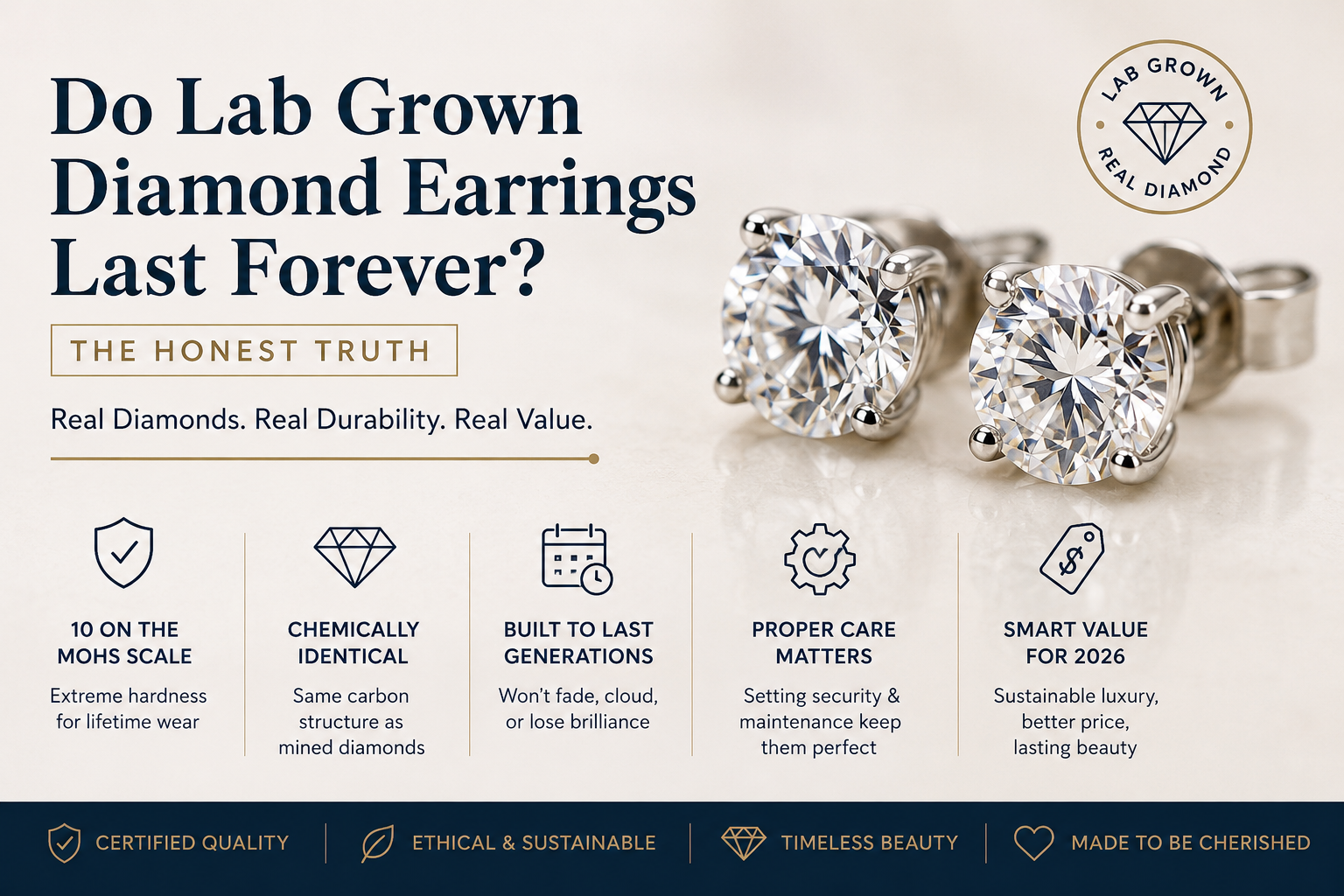
This is one of the most common questions I hear, and the honest answer is: not in the ways most people assume. Lab grown diamonds have the same hardness, brilliance, and optical properties as natural diamonds because they are made of the same material, carbon crystallized into the same structure.
Grading standards are also the same. A lab grown diamond graded VS1 clarity and F color will look identical to a natural diamond with the same grades, because the grading criteria don't change based on origin.
The real differences are in price and rarity. Lab grown diamonds typically cost significantly less per carat than natural diamonds of equivalent quality, which allows buyers to choose a larger stone or higher clarity grade for the same budget. Natural diamonds carry a rarity value tied to their geological origin, which some buyers still prioritize for sentimental or investment reasons.
Neither option is objectively "better." It depends on what you value: budget flexibility and sustainability, or the tradition and scarcity associated with natural stones. Quality itself, when comparing equivalent grades, does not favor one over the other.
Use this as a quick reference before you buy:
Certificate from IGI, GIA, or another recognized grading lab
Cut grade of Very Good or Excellent
Eye-clean clarity, generally VS2 or better for peace of mind
Color grade appropriate for your chosen metal tone
Confirmed metal purity and hallmarking
Secure, gap-free setting with no visible movement
Matching stones in size, color, and brilliance
Clear return and exchange policy
Sturdy, comfortable backing suited to your ear type
Care instructions provided at the time of purchase
If a listing or seller checks every box here, you're looking at a genuinely well-made pair, not just a well-marketed one.
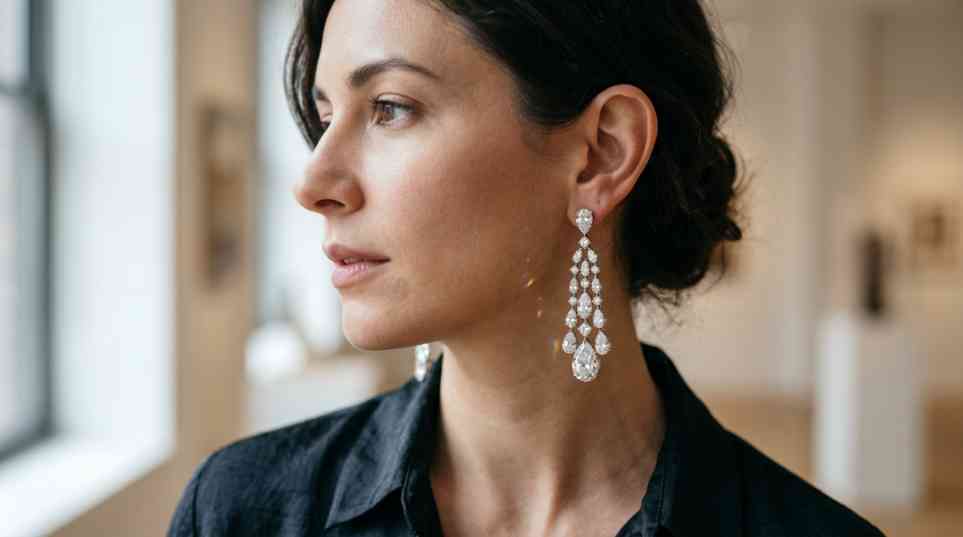
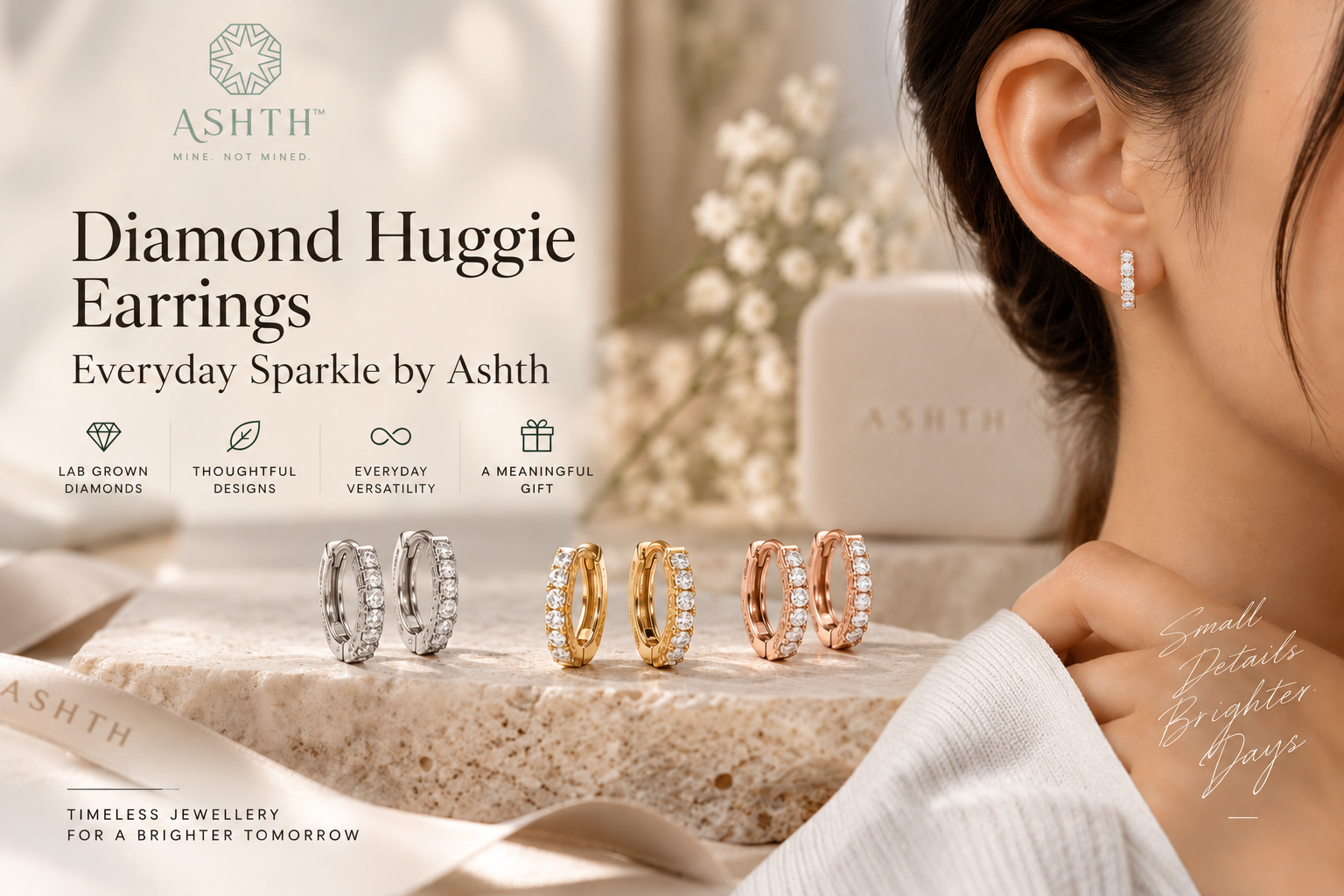
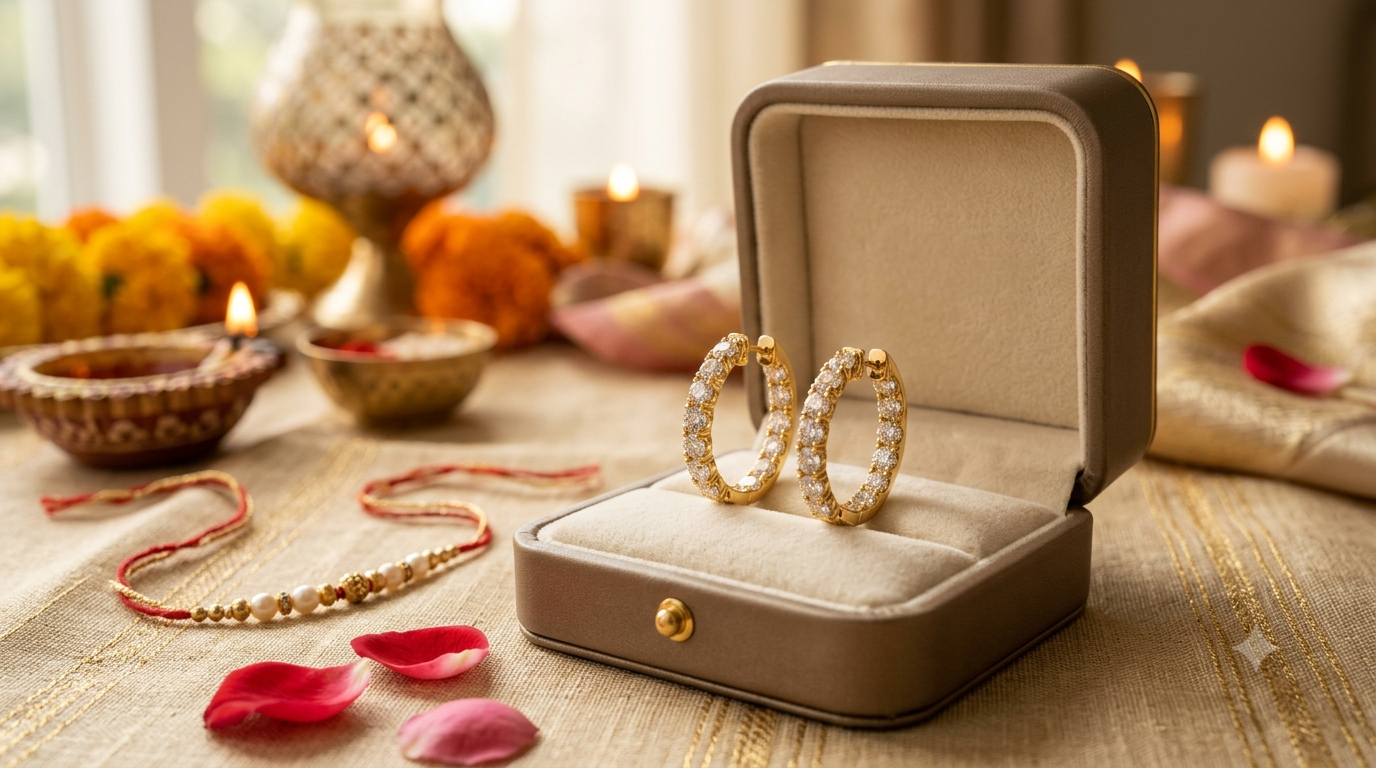
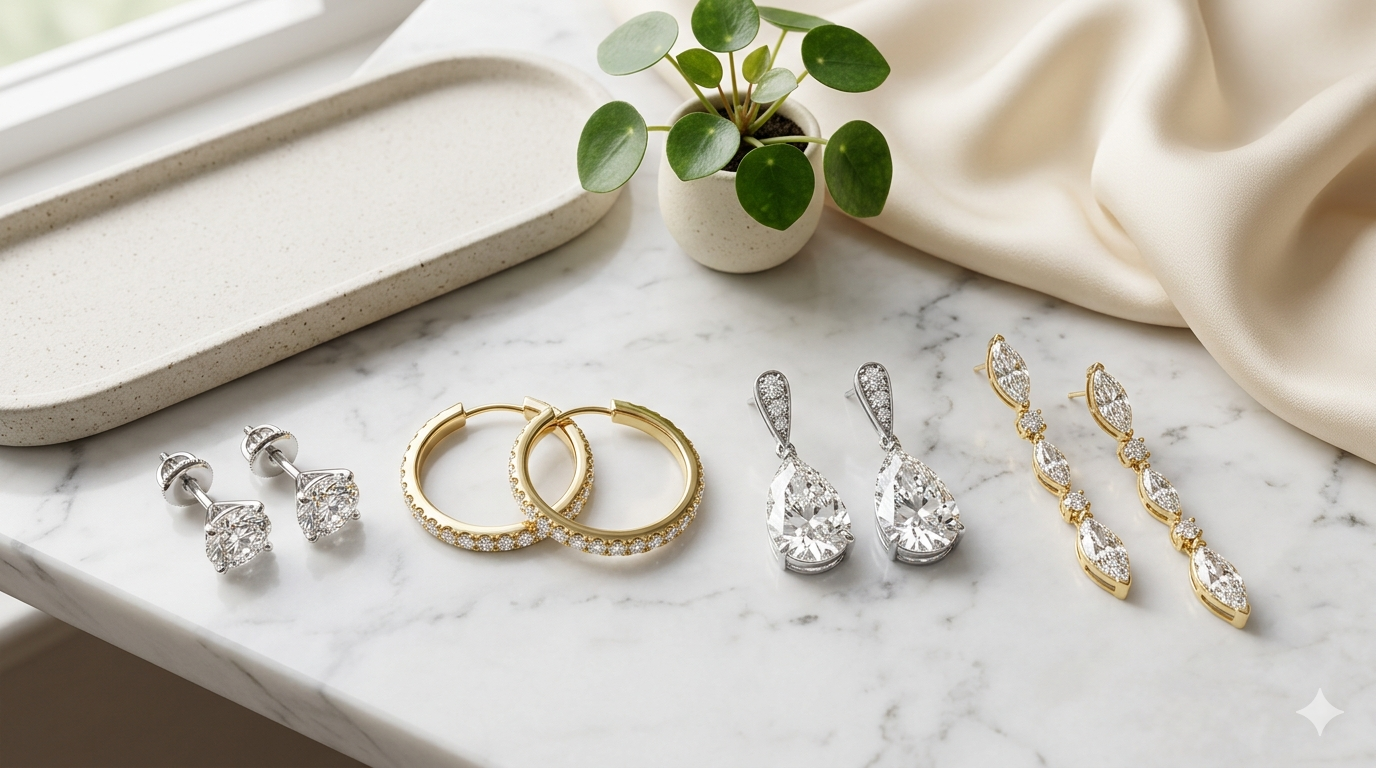
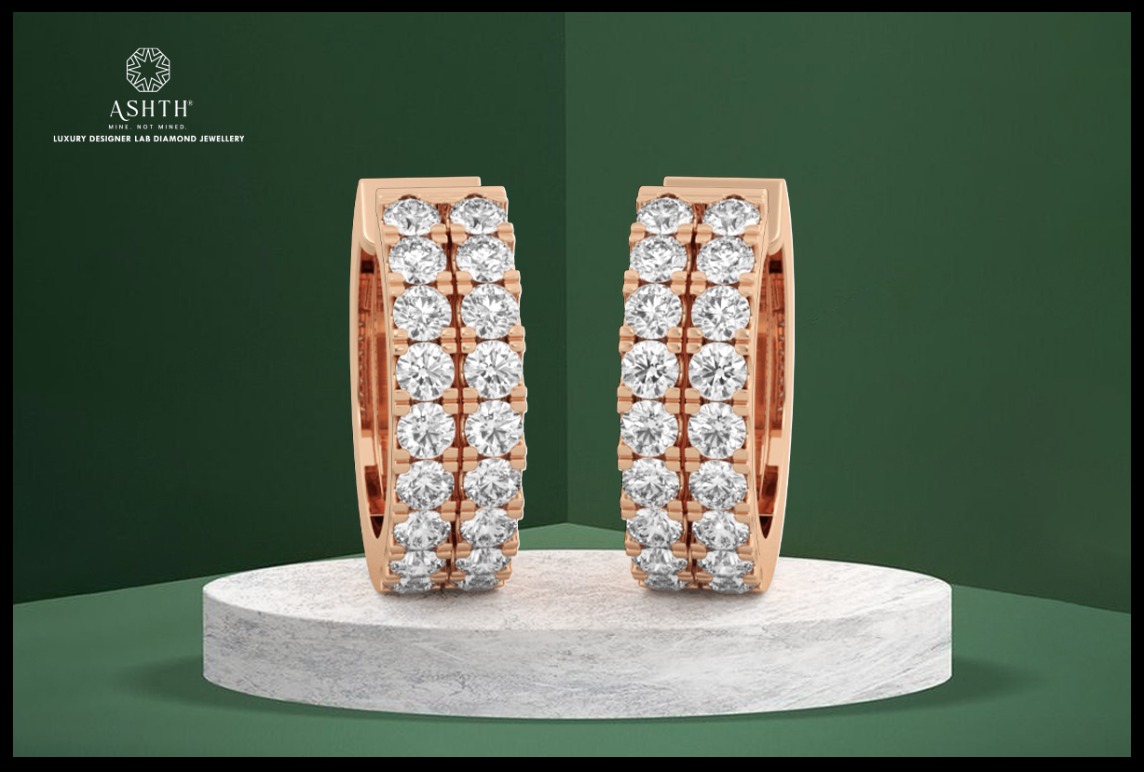
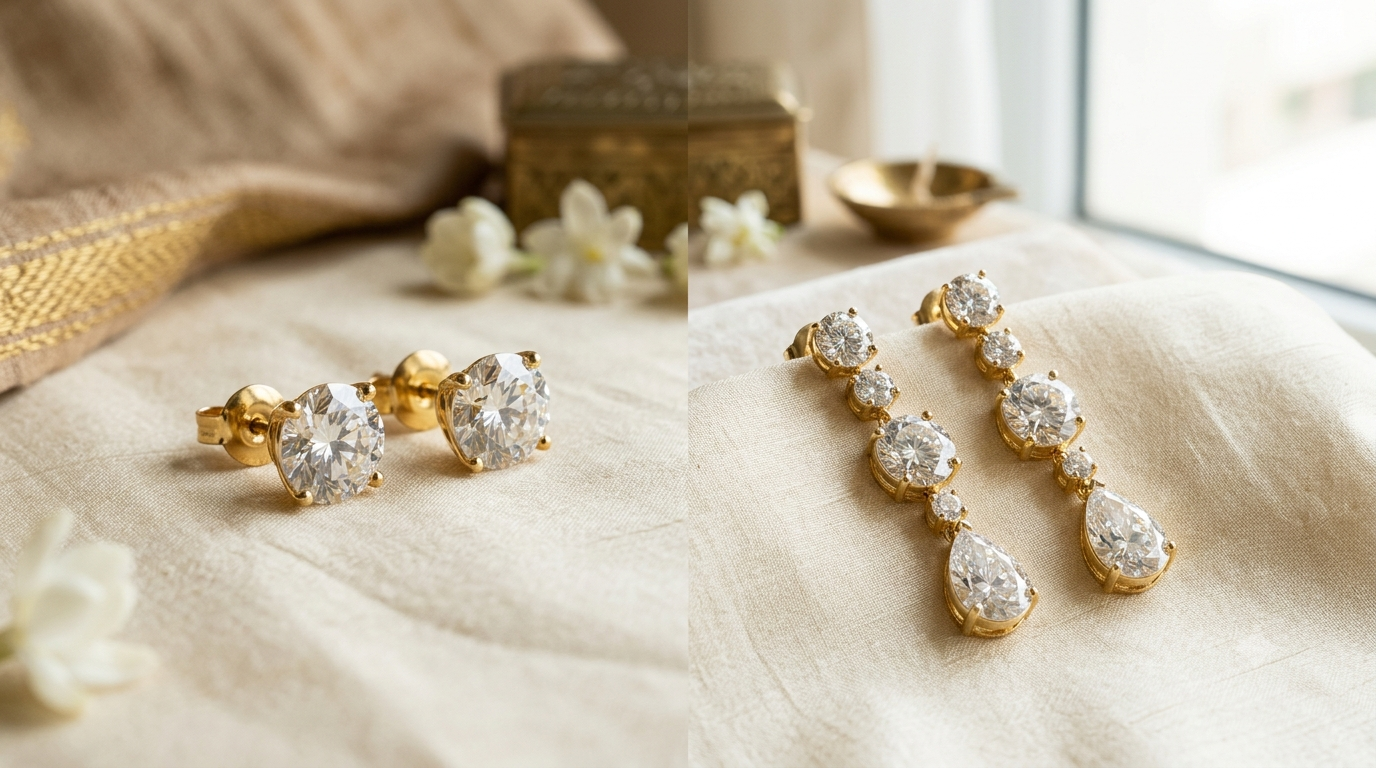
Quality checks matter regardless of style, but the setting you choose does affect how easy those checks are to perform. Simple studs make it easy to inspect the setting from every angle. If you prefer something with more movement and light, hoop diamond earrings distribute stones along a curved band, so it's worth checking that each stone along the hoop matches in color and clarity, not just the ones closest to the ear. For those drawn to a more dramatic silhouette, long diamond earrings often combine multiple stones or drop designs, which makes matching and setting security even more important to verify before buying, since there are more connection points that could loosen over time.
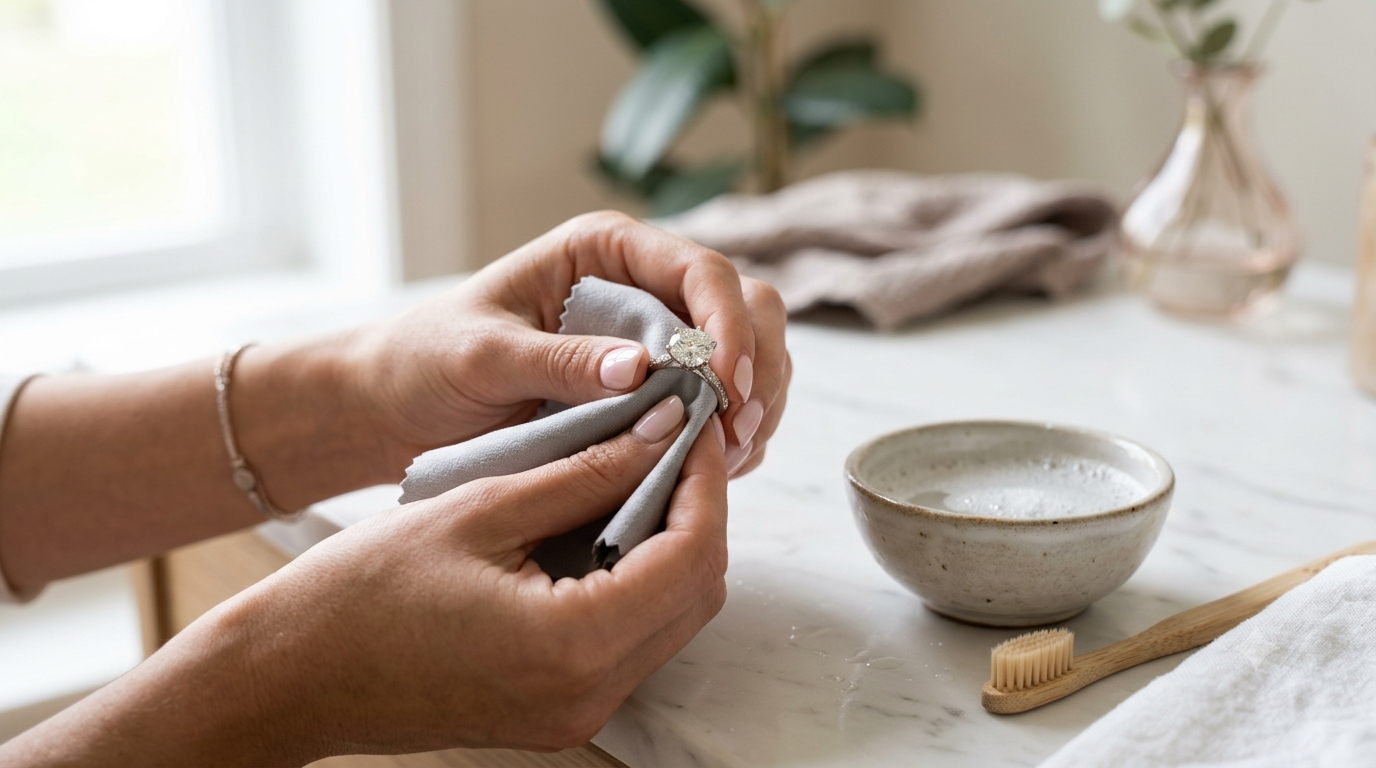
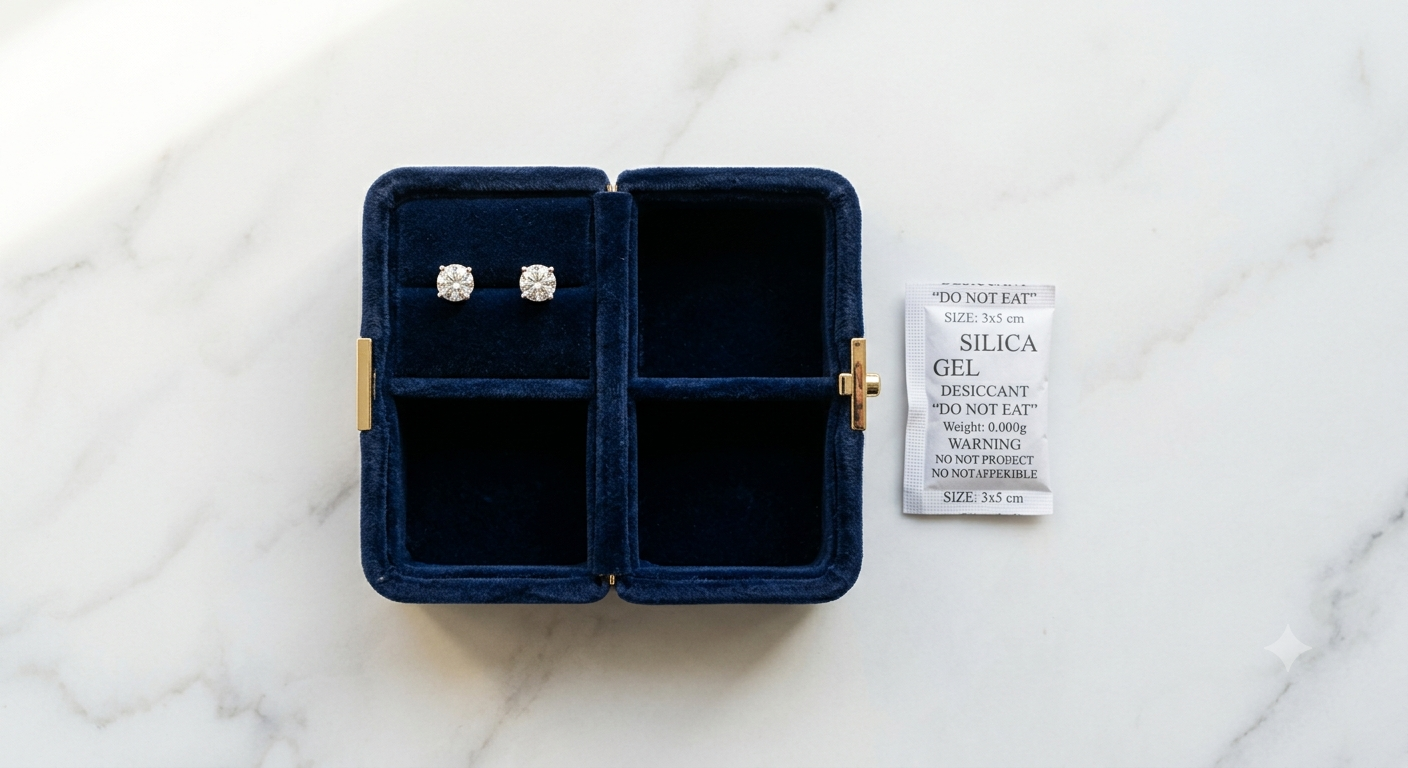
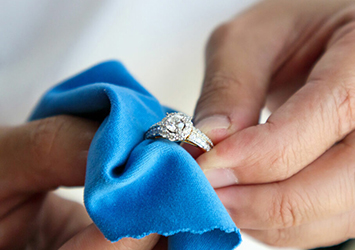
Buying well-made earrings is only half the equation. How you store and clean them affects how long that quality lasts. Keep earrings in a lined box or individual pouch to avoid scratching, and clean them occasionally with a soft brush and mild soap solution rather than harsh chemicals. If you travel frequently, it's worth reading our guide on How to Store Fine Earrings While Traveling, which covers practical ways to protect settings and prevent lost backings on the go.
1. How can you tell if lab grown diamond earrings are high quality?
Check for independent certification from a lab like IGI or GIA, confirm the cut grade is Very Good or Excellent, and look for eye-clean clarity with a color grade suited to the metal. Inspect the setting for secure prongs or bezels, confirm the metal purity, and make sure both stones in the pair match closely in size and brilliance.
2. Are lab grown diamond earrings considered "real" diamonds?
Yes. Lab grown diamonds have the same chemical composition, hardness, and optical properties as natural diamonds. The only difference is how they form, in a controlled lab setting rather than underground over millions of years. They are graded using the same 4Cs standards.
3. What certification should I look for when buying lab grown diamond earrings?
Look for certification from IGI or GIA, the two most widely recognized grading laboratories for lab grown diamonds. The report should list cut, clarity, color, and carat weight, along with a report number you can verify on the laboratory's website.
4. Do lab grown diamonds sparkle as much as natural diamonds?
Yes, sparkle depends on cut quality, not origin. A well-cut lab grown diamond will display the same brilliance and fire as a natural diamond with identical proportions and clarity. Poor cutting, not the diamond's origin, is what causes dull sparkle.
5. What's the difference between total carat weight and individual stone weight in earrings?
Total carat weight refers to the combined weight of both diamonds in the pair, while individual stone weight refers to each diamond separately. A listing showing "1 carat total weight" typically means each earring holds a 0.5 carat stone, not a full carat each. Always confirm which measurement is being used.
6. Can lab grown diamond earrings lose their sparkle over time?
The diamond itself won't lose brilliance, since diamonds are extremely durable and scratch-resistant. However, buildup from lotion, oil, or dust can dull the appearance over time. Regular gentle cleaning restores the original sparkle without any risk to the stone.
7. What backing type is best for diamond stud or drop earrings?
Screw backs or secure push backs with a locking mechanism are generally recommended for diamond earrings, especially for larger or drop styles, since they reduce the risk of loss. Basic friction backs work for lightweight studs but may not provide enough security for heavier designs.
8. Is it worth paying more for a higher clarity grade in lab grown diamond earrings?
Only up to a point. Once a diamond is eye-clean, meaning no inclusions are visible without magnification, paying for a significantly higher clarity grade often adds cost without a visible difference. It's usually better to prioritize cut quality once eye-clean clarity is achieved.
9. How do I know if the two diamonds in a pair of earrings actually match?
Ask to see both earrings photographed together under consistent lighting, ideally in both a well-lit room and softer indirect light. Matching stones should show similar size, color, and brilliance. Noticeable differences in sparkle or tone between the two usually indicate mismatched inventory.
10. Should I choose 14K or 18K gold for diamond earrings?
18K gold contains more pure gold, giving it a richer color and slightly higher hypoallergenic quality, but it's softer and more prone to scratching. 14K gold is more durable for daily wear and slightly more affordable. Both are considered fine jewelry grades; the choice comes down to durability preference versus richness of color.
Learning how to tell if lab grown diamond earrings are high quality isn't about becoming a gemologist overnight. It's about knowing which questions to ask and which details actually matter. Cut quality, certification, setting security, and matching stones tell you far more about a pair of earrings than carat weight alone ever will.
Take your time, ask for certification, and don't be afraid to request additional photos or videos before buying, especially online. A seller confident in their craftsmanship will welcome those questions rather than avoid them. With the right checklist in hand, you can shop for lab grown diamond earrings with the same confidence as someone who's done this for years.

 Round
Round Pear
Pear Heart
Heart PRINCESS
 Oval
Oval CUSHION
 EMERALD
 MARQUISE
 Asscher
 RADIANT
 Ashth CUT
 ROSE CUT
 BRIOLETTE
 SINGLE CUT
 TRAPEZIUM
 TULIP
TULIP TRIANGLE
 BUTTERFLY
 FLOWER
 MOVAL
MOVAL CLOVER
 BAGUETTE
 9KT ASHTH CUT
 9KT MARQUISE
 9KT PEAR
 9KT RADIANT
 9KT EMERALD