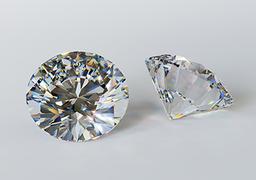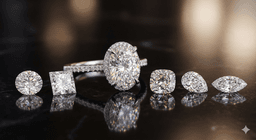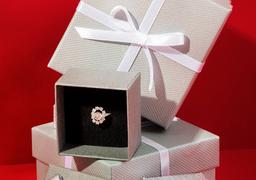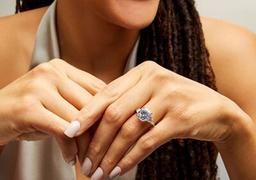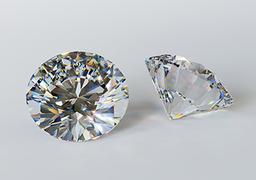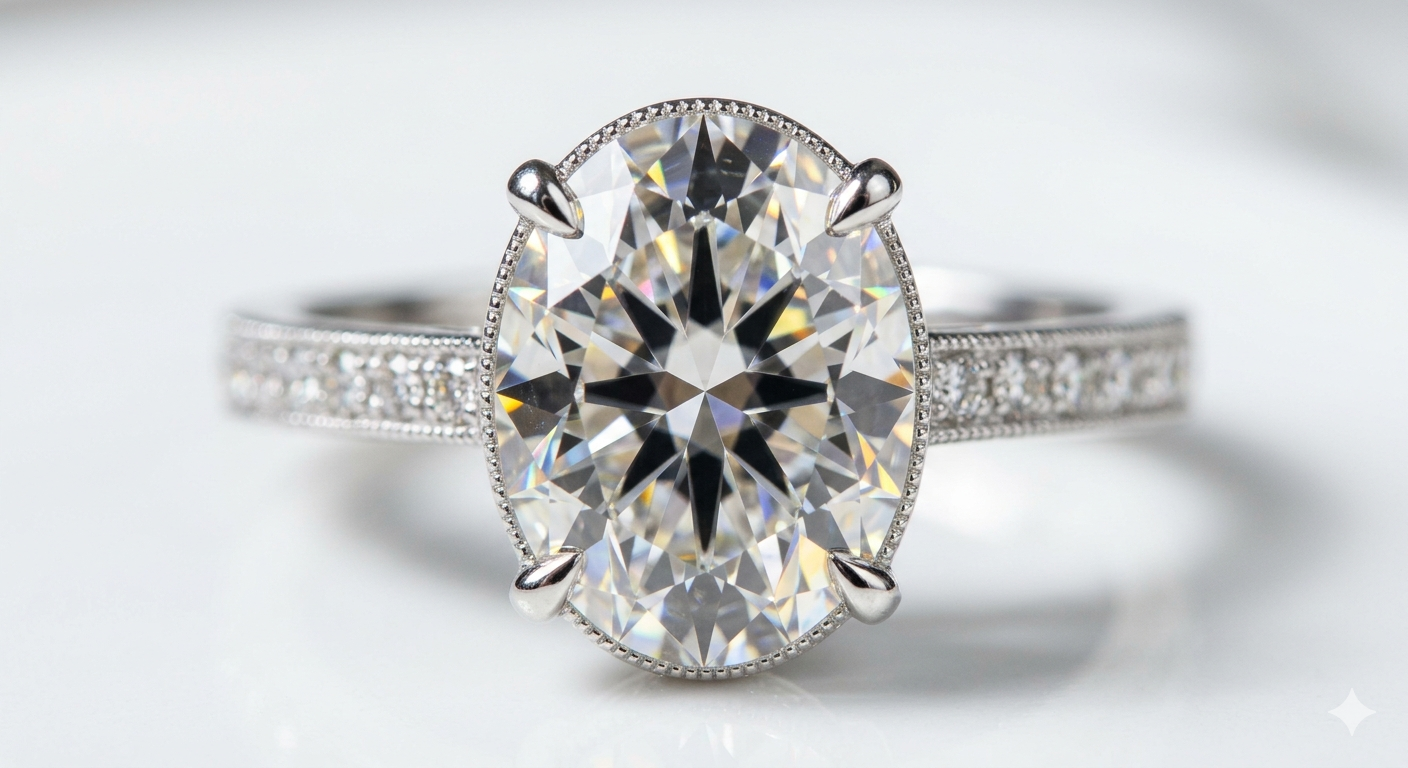
Picture this: you see a beautiful oval diamond ring. It shines from the edges, but the center looks dark, like a shadow in the shape of a bow-tie. This small detail can reduce the beauty of the diamond.
This effect is called the bow-tie effect.
In simple words, the bow-tie effect is a dark band across the middle of an oval diamond. It looks like a bow-tie and can make the diamond look less bright.
This effect is common in oval diamonds and other long shapes like pear and marquise cuts. But not every bow-tie is bad. A light bow-tie can look natural, while a strong one can reduce sparkle.
In this guide, you will learn:
What causes the bow-tie effect
How to spot it before buying
Why it matters
How to avoid it
Diamonds shine because they reflect light. When light enters a diamond, it should bounce inside and come back to your eyes.
In oval diamonds, if the angles are not perfect, light escapes from the sides or bottom. This creates a dark area in the center, which forms the bow-tie shape.
The proportions of a diamond affect how light moves inside it.
Important factors include:
Depth of the diamond
Table size
Length-to-width ratio
Many oval diamonds look good with a ratio between 1.33 and 1.66, but this alone does not remove the bow-tie. Cut quality is more important.
Diamonds are made of small flat surfaces called facets.
If these facets are not aligned well:
Light will not reflect evenly
Some areas will look bright
Some areas will look dark
This uneven reflection creates the bow-tie effect.
The skill of the diamond cutter plays a big role.
A well-cut diamond:
Has good symmetry
Reflects light evenly
Looks bright from all angles
A poorly cut diamond may have a strong and dark bow-tie.
It is important to understand the difference:
Light leakage → light escapes, diamond looks dull
Contrast → mix of light and dark, helps sparkle
A small bow-tie is normal and part of contrast. But a large, dark bow-tie is caused by too much light leakage.
You can check the bow-tie effect easily.
Steps:
Hold the diamond under light
Move it slowly
Watch the center
If the center stays dark, the bow-tie is strong.
Always check the diamond in:
Natural sunlight
Indoor light
Jewelry store lighting
Some diamonds look bright in store lights but show a bow-tie in normal light.
Experts use tools like:
ASET (Angular Spectrum Evaluation Tool)
Ideal Scope
These tools show:
Bright light return
Dark areas (bow-tie zones)
If you are buying online:
Ask for HD videos
Watch how the diamond moves
A good diamond will sparkle across the surface, not just the edges.
Diamond certificates do not mention the bow-tie effect.
But you can check:
Symmetry grade (Very Good or Excellent)
Polish quality
Still, the best way is to see the diamond yourself.
A strong bow-tie:
Blocks light from returning
Reduces sparkle in the center
Makes the diamond look dull
A good diamond shines evenly across its surface.
Mild bow-tie → soft and not very visible
Moderate bow-tie → noticeable but acceptable
Severe bow-tie → dark and distracting
Most buyers prefer a diamond with a minimal bow-tie.
Diamonds with a strong bow-tie:
Look less attractive
Are harder to sell
Because of this, they may have a lower market value compared to better-cut diamonds.
Many buyers:
Focus only on size or price
Ignore how the diamond looks in real life
A diamond may look good in photos but disappointing in person.
Look for balanced proportions such as:
Depth: around 59% to 63%
Even facet pattern
Balanced table size
These help improve light reflection.
Always choose diamonds with:
Excellent or Very Good symmetry
High-quality cut
Cut quality is the most important factor in reducing the bow-tie effect.
A ratio between 1.33 and 1.50 is often preferred.
But remember:
👉 Ratio affects shape
👉 Cut quality affects sparkle
Do not buy the first diamond you see.
Compare:
Multiple diamonds
Different lighting conditions
Videos side by side
This helps you find the best option.
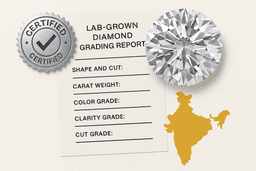
Lab reports focus on:
Carat
Color
Clarity
They do not measure visual effects like bow-tie. That’s why personal inspection is important.
👉 If you are planning to buy an oval diamond ring india, always check the diamond in different lighting conditions and review videos carefully to make sure the bow-tie effect is minimal.
Pick sellers who provide:
HD videos
Clear return policies
Transparent details
This helps you inspect the diamond better.
A well-cut oval diamond:
Shows even brightness
Has no dark center
Sparkles from all sides
This is what you should look for.
When you compare:
Poor cut → dark center
Good cut → balanced sparkle
The difference is easy to see.
Many buyers today also choose a lab grown diamond ring because it offers the same beauty at a better price. But even in lab diamonds, cut quality is very important to avoid a strong bow-tie effect.
What If You Already Have a Bow-Tie Diamond?
In some cases, yes.
A diamond can be:
Recut to improve light reflection
But this may reduce its size and cost extra money.
You can reduce the look of a bow-tie by:
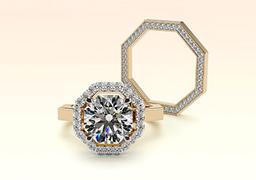
Using a halo setting
Adding side stones
Choosing white metal
These make the diamond look brighter.
Keep your diamond if:
The bow-tie is light
It still looks beautiful
Upgrade if:
The center looks too dark
You are not happy with its sparkle
The bow-tie effect is a common feature in oval diamonds. It happens when light does not reflect properly, creating a dark area in the center.
A small bow-tie is normal, but a strong one can reduce beauty and sparkle.
Always check the diamond in different lighting
Do not depend only on certificates
Focus on cut and symmetry
Compare multiple diamonds
The best way to avoid a strong bow-tie is simple:
👉 Always view the diamond in real life or in HD video before buying.
This will help you choose a diamond that looks bright, beautiful, and worth your money.